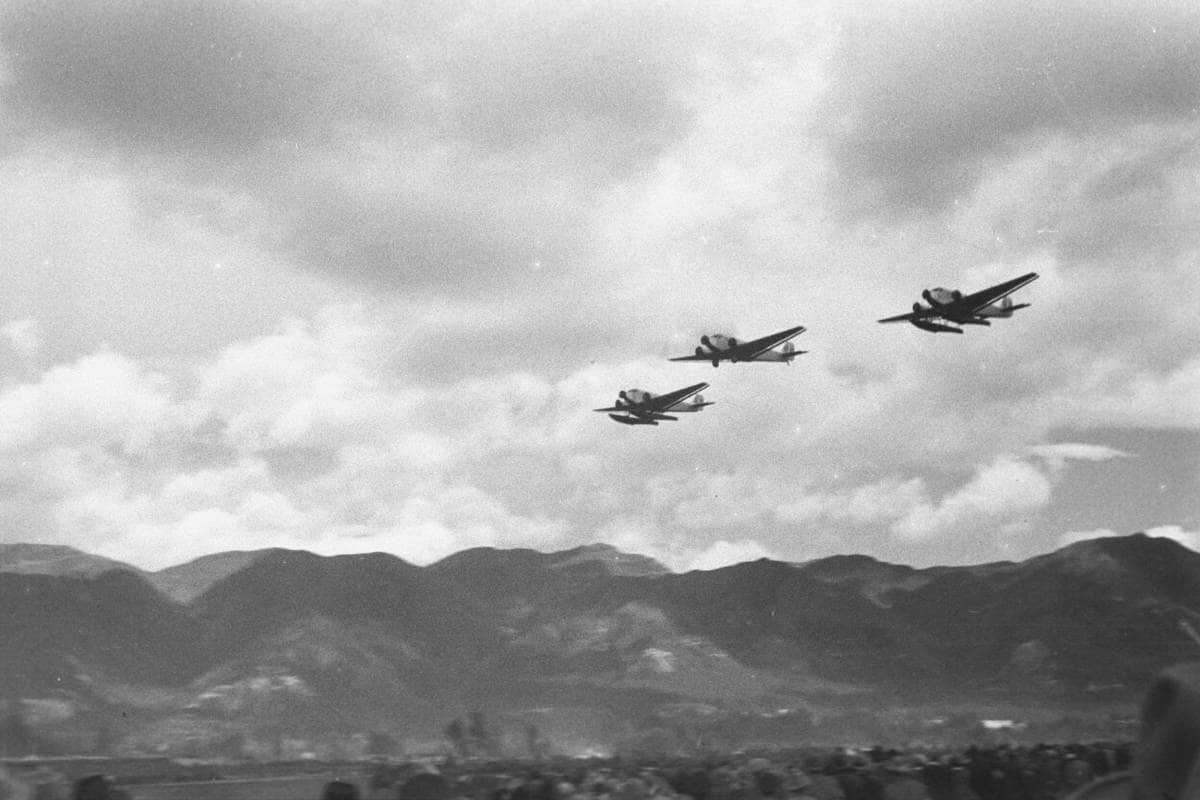
Imagen de la sabána de Bogotá , tomada entre 1934-37. Parte del archivo del fotográfo alemán: Horst Martin. "Desfile militar".
Image from the archive of the German photographer: Horst Martin, taken aprox. 1934 -1937. Location: Bogotá´s savanna during a military parade.
Un archivo familiar que se despliega a partir de un juego de cartas
ANA & LOUISE es un proyecto desarrollado entre mujeres vivas y mujeres muertas, una sesión de espiritismo, un archivo que se performa.
Somos un grupo modular e interoceánico, que trabaja de manera asincrónica y en cuatro lenguas diferentes; español, portugués, inglés y alemán.
Este proyecto surge como un espacio para investigar conjuntamente las historias de nuestras abuelas.
Expandimos dichas investigaciones a encuentros en los que incitamos a los asistentes a participar con sus propias historias, creando un caleidoscopio histórico y político que nos permite rever los efectos que el pasado siglo tuvo en nuestra historia, y la continuidad o el regreso de estrategias políticas del pasado que amenazan la libertad y la autodeterminación de las mujeres.


Metodología/
Methodology
Metodología/
Methodology
"Se trata(ba) de hacer surgir, a través del encuentro de tres imágenes dispares, ciertas correspondencias (íntimas y secretas) capaces de ofrecer un conocimiento transversal de esta complejidad histórica inagotable (la tabla genealógica), la complejidad geográfica (el mapa) y la complejidad imaginaria..."
(Didi-Hubermann/ Disparates/ Atlas, or the Anxious Gay science)
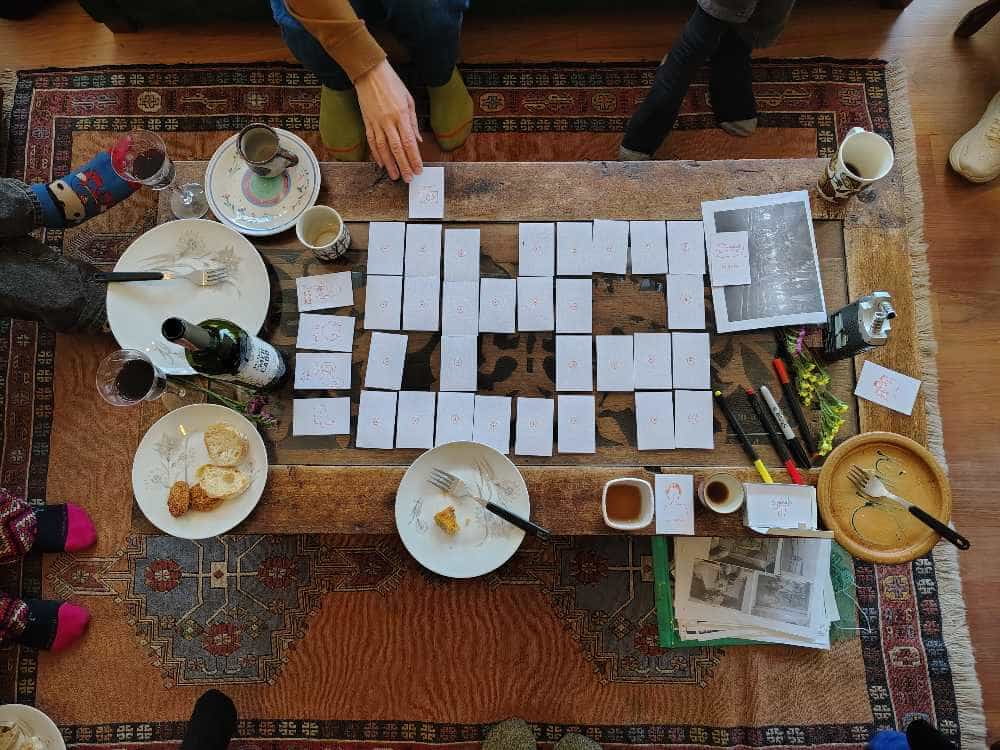
Partimos de un juego de cartas en donde el público es convidado a participar. A medida que el juego va avanzando, los puntos de relación entre las historias se dibujan sobre la mesa, y hacen su aparición, espíritus históricos, políticos y familiares, a través de dispositivos sonoros y visuales domésticos.
A continuación presentamos algunas de las figuras que hacen parte de este juego de cartas, y que funcionan como icebergs. Las cartas funcionan como un mecanismo de montaje que altera los puentes que se entretejen entre las figuras de sesión a sesión.
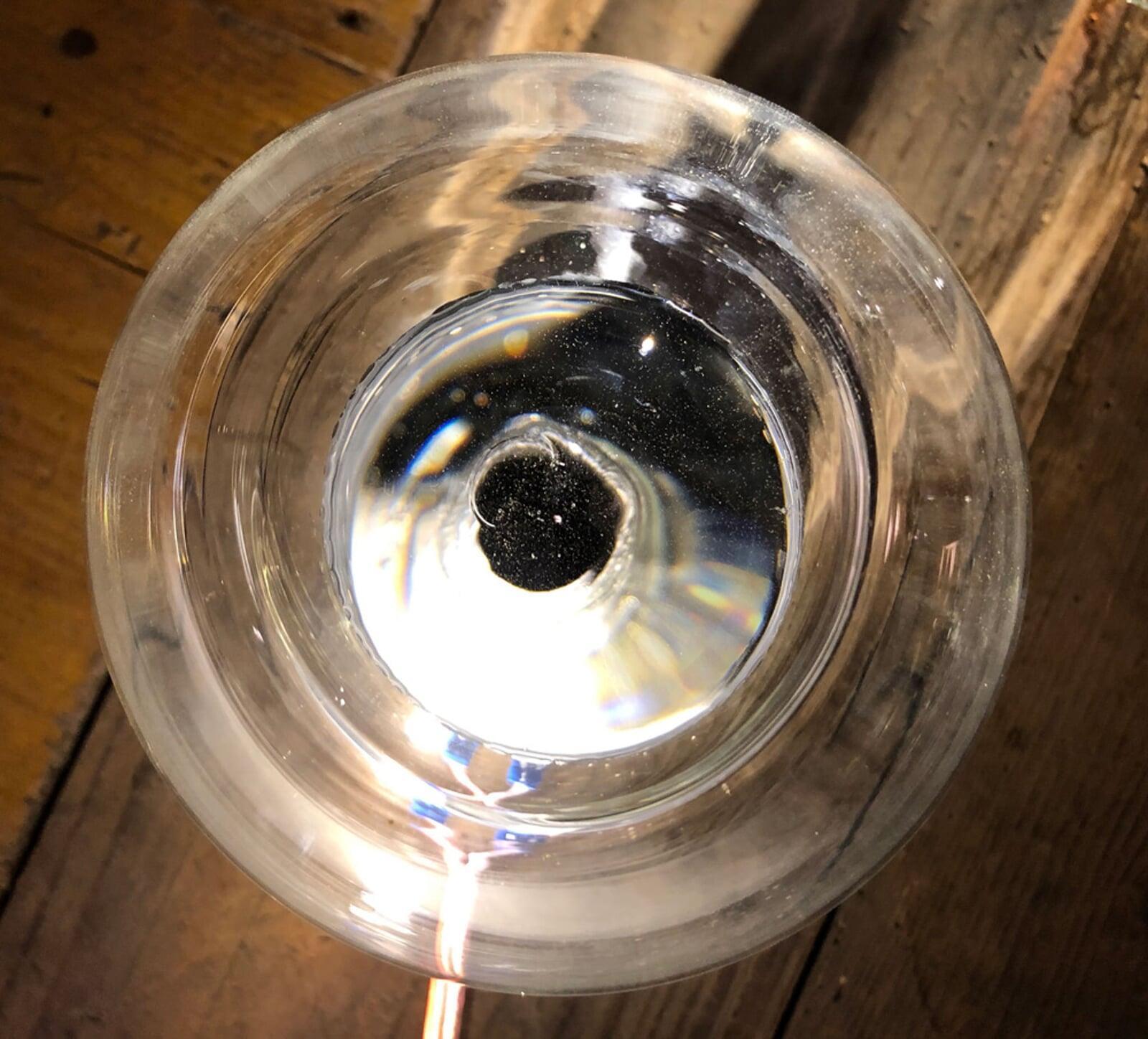
" My grandmother grew up in Aarau, very close to the River Aare. The river shaped her childhood in the sense that she had to learn to swim very well ...we all learnt to swim in a round pool in her garden. We started by diving and only gradually learnt the correct swimming movements. We often played a game with her and our parents, uncles, aunts and cousins called ‘Making the Aare’. We would all go round in circles together until such a strong undertow was created that the small pool in Thurgau actually felt like a river, similar to the Aare. We younger children whirled around in a circle like little wooden sticks."
"Mi abuela creció en Aarau, muy cerca del río Aare. El río marcó su infancia en el sentido de que tuvo que aprender desde pequeña a nadar muy bien... Todos aprendimos a nadar en una piscina redonda que había en su jardín. Empezamos tirándonos de cabeza y solo poco a poco aprendimos los movimientos correctos de natación. A menudo jugábamos con ella y con nuestros papás, tíos, tías y primos a un juego llamado ‘Hacer el Aare’. Todos dábamos vueltas juntos hasta que se formaba una corriente tan fuerte que la pequeña alberca de Thurgau parecía de verdad un río, parecido al Aare. Nosotros, los niños más pequeños, dábamos vueltas en círculo como pequeños palitos de madera."
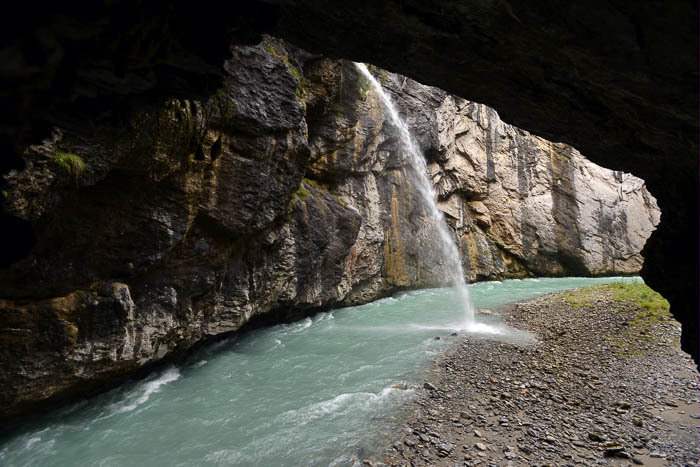
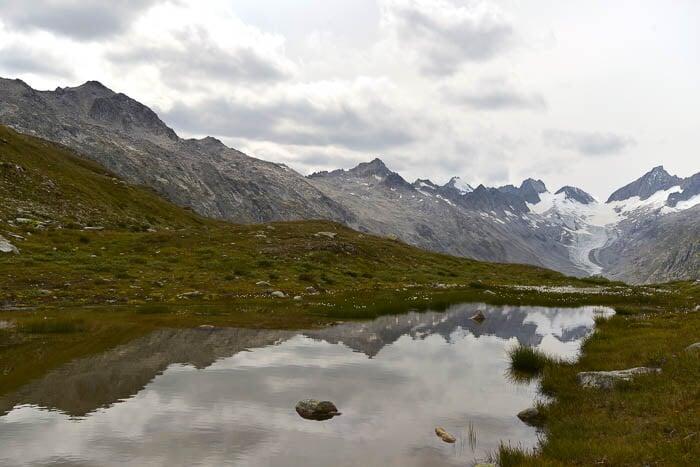
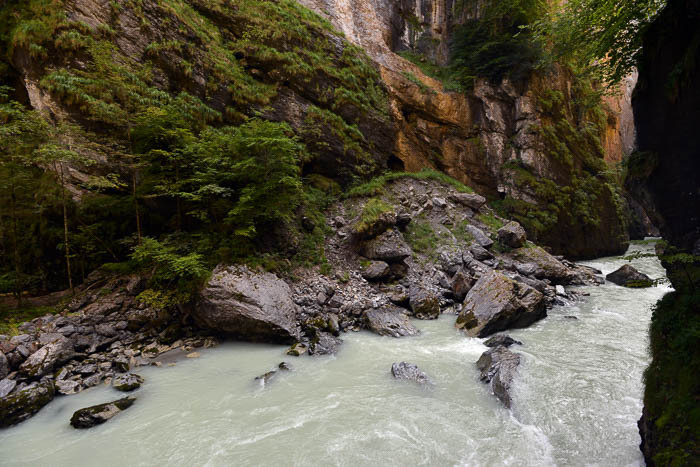
Desde el glaciar de Oberaar, siguiendo el curso del río Aare hasta Aarau (Suiza). Mirjam Wanner, julio de 2025 (cc)
From the Oberarglacier along the River Aare to Aarau. Mirjam Wanner, July 2025. All rights reserved.
" En los muchos viajes que mi abuela hizo, mientras trabajaba, de una orilla a la otra del Amazonas, abordo de un "recreio" (de Tabatinga a Manaos, de Benjamin Constance a Letícia, de Manaos a Tabatinga) llevó siempre con ella uno o dos de sus hijos, los demás (17 en total) la esperaban de este lado o del otro, en casa del padre o de otros familiares."
“On the many trips my grandmother did, from one bank of the Amazon to the other, aboard a ‘recreio’ (from Tabatinga to Manaus, from Benjamin Constance to Letícia, from Manaus to Tabatinga), she always took one or two of her children with her; the rest (17 in all) waited for her on one side or the other, at their father's house or with other relatives.”
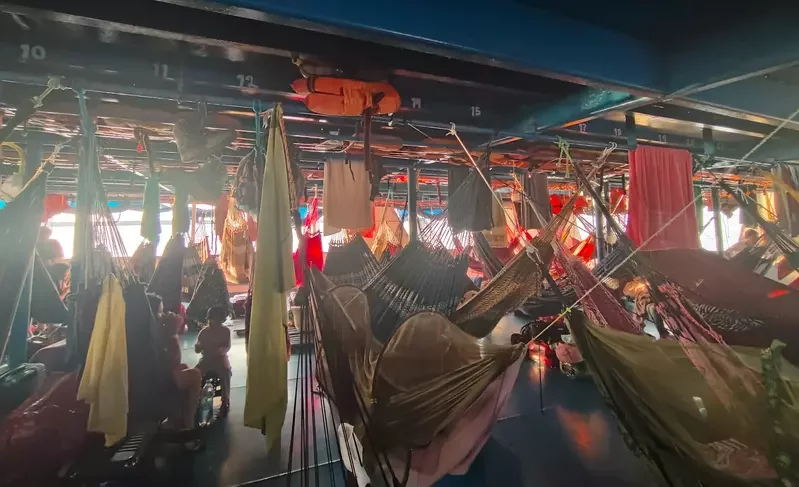
Interior del barco que viaja entre Leticia y Manaos . Tomada en diciembre de 2025 por Tatianna Castillo (cc)
Inner image of the boat traveling from Leticia to Manaos, taken by Tatianna Castillo. Brazil, december 2025, all rights reserved.
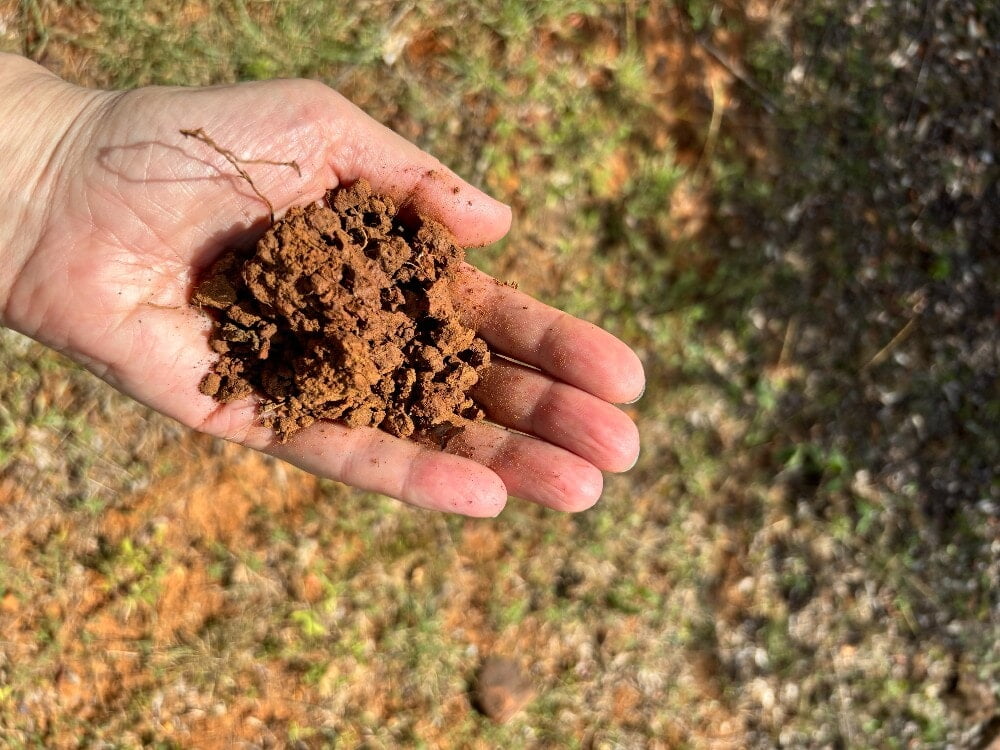
textura y color de la tierra en Barichara, Santander. Tomada por Mirjam Wanner en Barichara, Colombia. Julio de 2026 (cc)
texture and color of a fragment of soil in Barichara, Santander. Captured by Mirjam Wanner in Barcichara, Colombia. July 2026, all rights reserved.
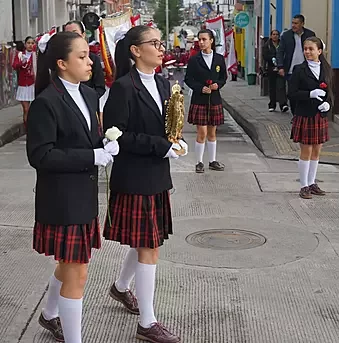
Alumnas y alumnos del colegio: Nuestra Señora del Rosario, desfilan con la imagen de la virgen patrona de esta institución. Cada uno lleva una rosa, las rosas blancas están destinadas a quienes han perdido a su madre, las rosas rojas son para quienes aún tienen a su madre viva.
Esta costumbre, ya vigente en la época de mi padre, se practica aún en muchas ciudades andinas.
Las bandas de guerra persisten en una buena parte de los colegios oficiales en Colombia. Sus ademanes continuan a emular los desfiles militares.
Students from "Nuestra Señora del Rosario" School march in a procession carrying the image of the institution’s patron saint. Each student carries a rose: the white roses are for those who have lost their mother, whilst the red roses are for those whose mothers are still alive. This custom, which was already in place in my father’s day, is still practiced in many Andean cities.
Marching bands are still a feature in many state schools in Colombia. Their gestures continue to mimic military parades.
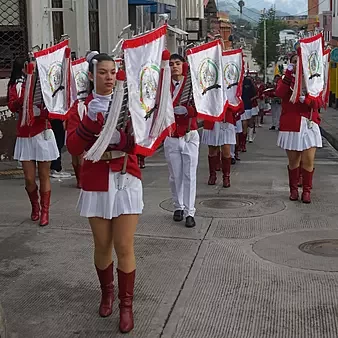
Imagenes de un desfile escolar en honor a la virgen del Rosario, patrona del colegio del mismo nombre. Tomadas por Sylvia Jaimes en Málaga, Colombia. Octubre de 2025 (cc)
Images from a school parade in Málaga, honoring "Our Lady of the Rosary" , patronage of the school of the same name. Captured by Sylvia Jaimes. Málaga- Colombia, October 2025, all rights reserved.
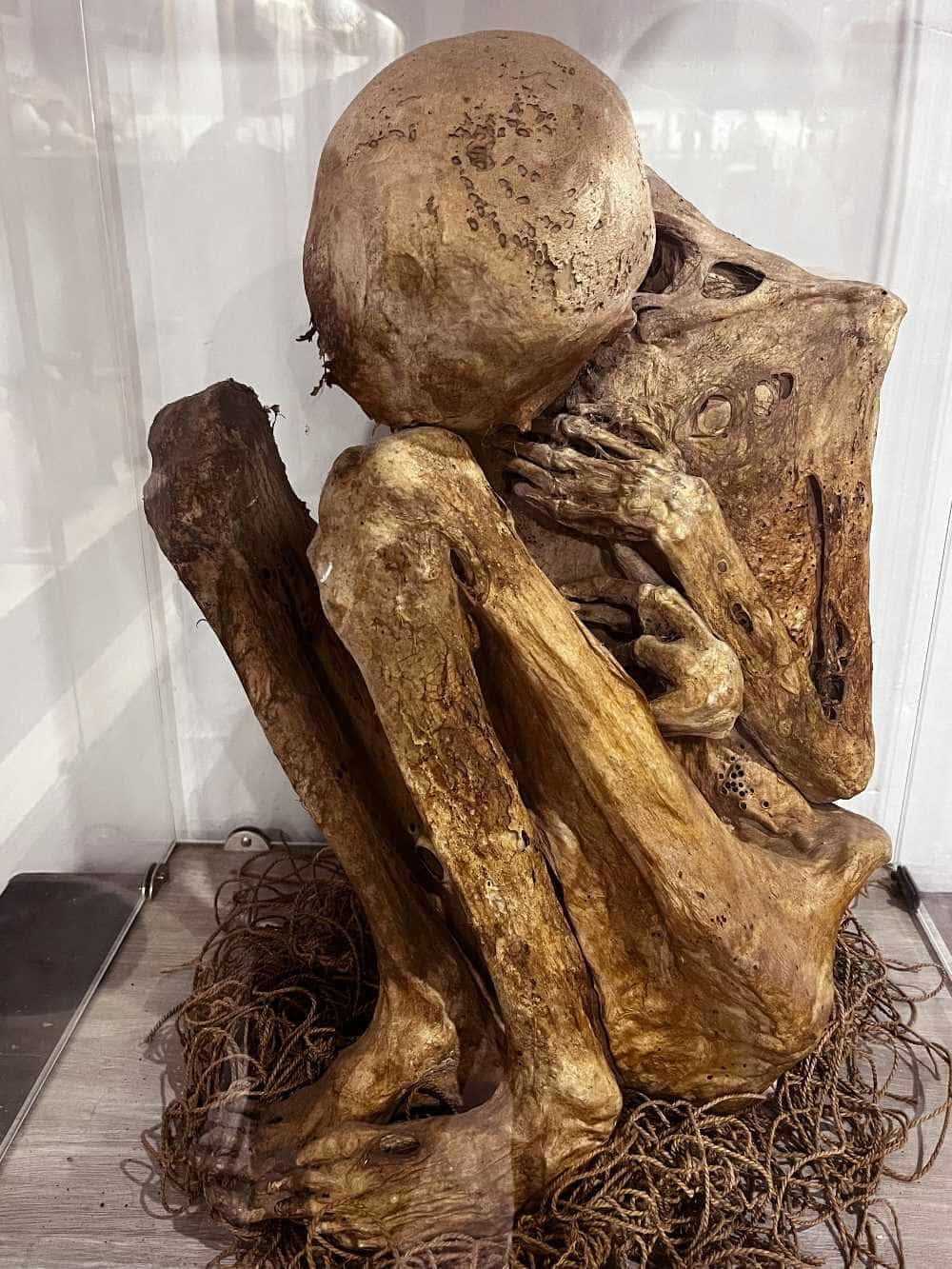
Momia preservada en el Museo Guane, Santander. Imagen por Sylvia Jaimes en Guane, Colombia. Julio de 2026 (cc)
Mummy on display at the Guane Museum, Santander. Photo by Sylvia Jaimes in Guane, Colombia. July 2026 (cc).
"Me sorprende de manera significativa, la inmortalidad que permite un encuentro cuerpo a cuerpo entre quienes estamos vivos y las momias de épocas lejanas. me sorprenden las materias humanas que prevalecen por siglos, cuyos detalles más externos (como las uñas, el cabello, la fina capa de piel seca y oscurecida que las cubre) me dan escalofrío.
Gracias a la prevalencia de sus materias orgánicas, mi abuela y yo nos encontramos por casualidad, cuando el nicho en el que sus restos reposaban iba a ser demolido. Quise verla, sus huesos eran de color rojo ladrillo, ya no había cráneo ni fémur, lo que más se destacaba era una cabellera castaña y ondulada que envolvía todos los restos óseos."
"I am profoundly struck by the immortality that allows for a face-to-face encounter between those of us who are alive and the mummies from distant eras. I am struck by the human remains that have endured for centuries, whose most outward features—such as the fingernails, the hair, and the thin layer of dry, darkened skin covering them—send a chill down my spine.
Thanks to the preservation of organic matter, my grandmother and I met by chance just as the niche where her remains lay was about to be demolished. I wanted to see her; her bones were brick-red in color. Her skull and femur were gone, what stood out most was a heavy thread of wavy, chestnut-brown hair that enveloped all her skeletal remains."
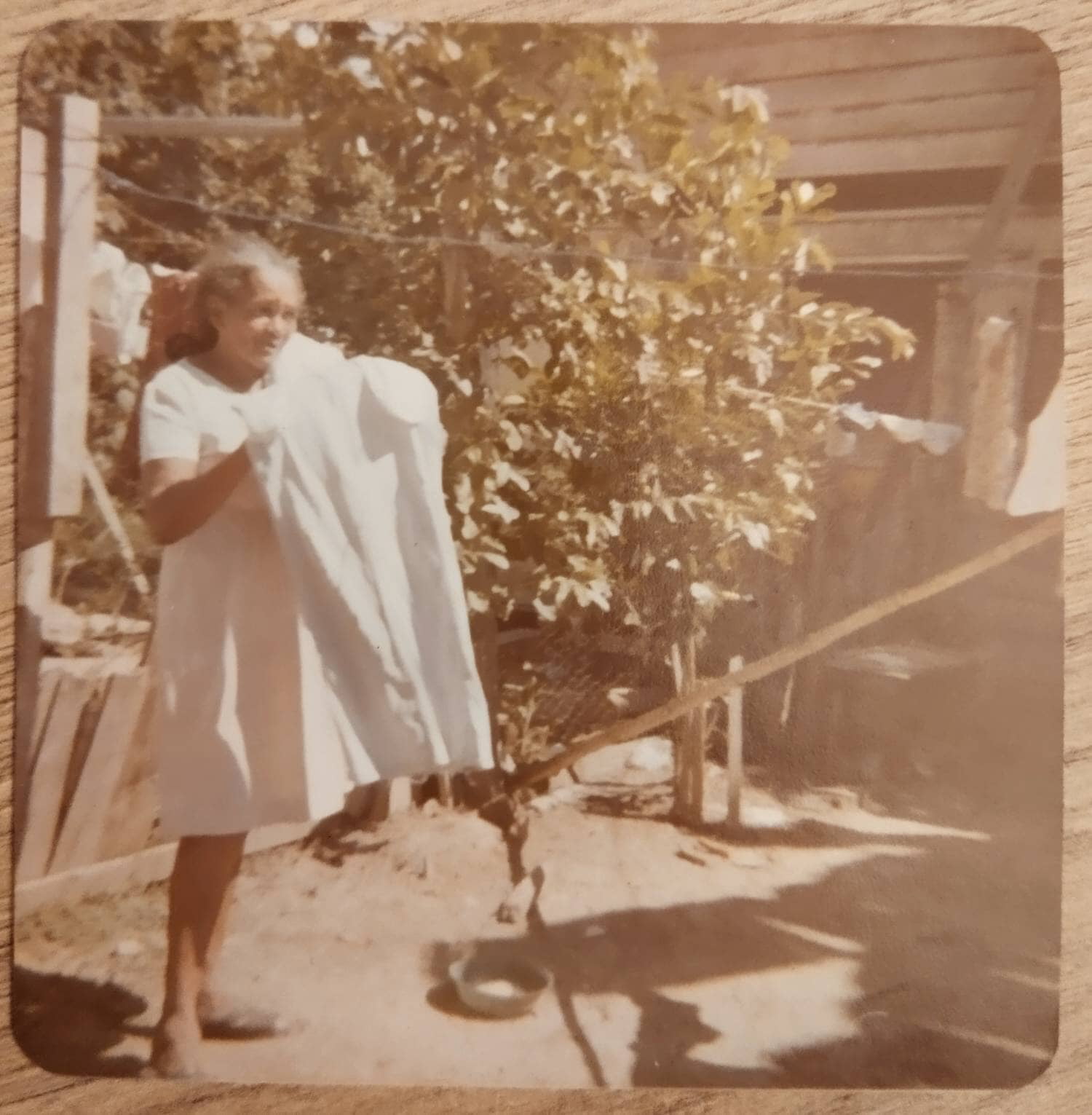
Aurea en el patio de su casa. Autor desconocido, parte del archivo familiar de Tatianna Castillo (cc)
Aurea in her backyard. Unknown author, part of the family Tatianna Castillo's family archive, all rights reserved.
"Mi padre cuenta varias veces acompañó a mi abuela a sesiones de espiritismo en la que ella servía como medium. Eran comunes los cantos y los enfrentamientos entre mediums. Una vez, en el entierro de uno de estos maestros medium, en cuento todos estaban haciendo sus oraciones el muerto de repente se sentó, mi padre dice que todos comenzaron a gritar, mi abuela fue la única que mantuvo la calma, agarró la mano de mi padre y espero en silencio a que el muerto se volviera a acostar. "
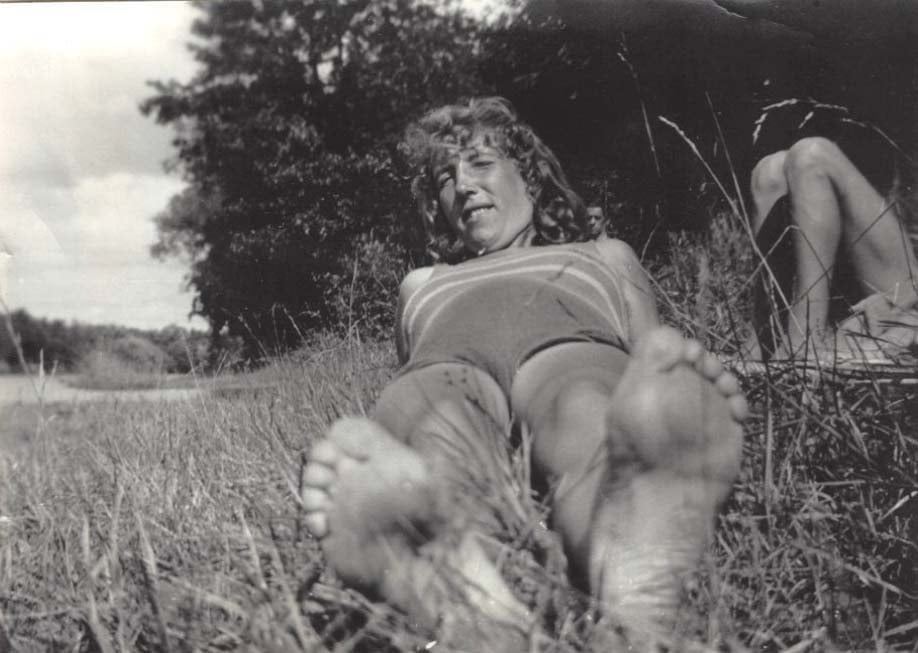
Bildlegende: Louise beim baden mit Freunden ca. 1929
Caption: Louise having a swim with friends, c. 1929
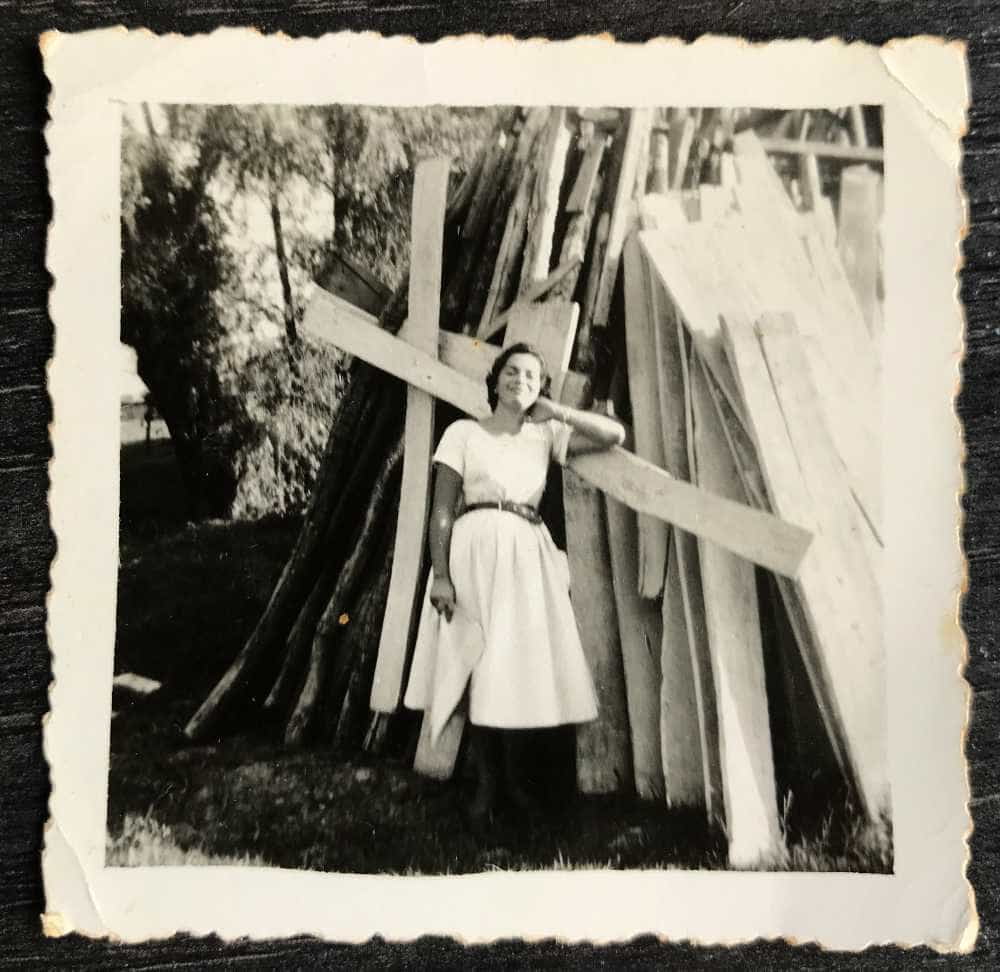
"Louise absolvierte ca. 1926 eine Ausbildung in einem bekannten Fotostudio in Aarau. Dort lernte sie neben der Fotografie auch, wie man Filme und Abzüge entwickelt sowie Kameras und das gesamte dazugehörige Zubehör verkauft. Ihr Nachlass zeigt deutlich, dass es ihr in dieser Zeit viel Freude bereitete, sich selbst, ihre Geschwister und ihre Freunde bei Freizeitaktivitäten im Freien zu fotografieren. Es gibt unzählige Bilder von ihr in der Natur, auf denen sie posiert, schwimmt, wandert, tanzt und springt. Die Bilder strahlen eine grosse Unbeschwertheit, Verspieltheit und Lebensfreude aus.
Sie sind Zeugnisse des Lebens einer jungen Frau, die für einen kurzen Moment frei war, mit ihrer Zeit und ihren Mitteln zu tun, was sie wollte."
"Around 1926, Louise started an apprenticeship at a well-known photography studio in Aarau. There, in addition to photography, she learnt how to develop film and prints, as well as how to sell cameras and all the associated equipment. Her estate clearly shows that, during this time, she took great pleasure in photographing herself, her siblings and her friends whilst they were enjoying outdoor leisure activities. There are countless pictures of her in natural surroundings, posing, swimming, walking, dancing and jumping. The pictures radiate a great sense of carefreeness, playfulness and joie de vivre.
They bear witness to the life of a young woman who, for a brief moment, was free to do as she pleased with her time and resources."
"Con su primer sueldo de profesora, mi tía mayor compró una radiola, tendría en ese entonces escasos 16 años. La casa de mis abuelos quedaba al frente del Colegio del Rosario. Las clases comenzaban después del almuerzo. Las amigas de mi tía menor, llegaban 30 minutos antes de las clases a casa para bailar. Cuando tocaba la campana del colegio, un grupo de colegialas salía corriendo de la casa de mis abuelos y cruzaba la calle para entrar a las carreras a clase."
"With her first paycheck as a teacher, my older aunt bought a jukebox; she must have been barely 16 at the time. My grandparents’ house was across the street from "Colegio del Rosario". Classes started after lunch. My younger aunt’s friends would arrive at the house 30 minutes before the classes started, to dance. At the sound of the school bell, a group of teenagers would rush out of my grandparents’ house and cross the street, running as fast as they could to get to class."
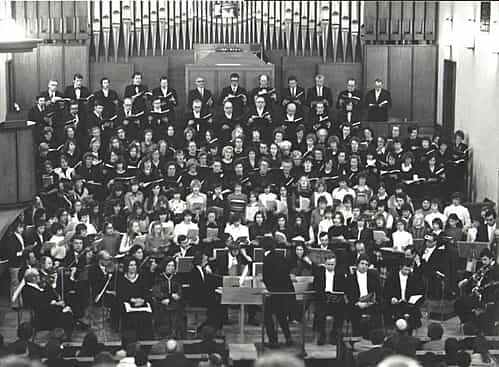
Bildlegende: Oratorienchor Frauenfeld während eines Konzerts in der Evangelischen Stadtkirche, frühe 1980er Jahre
" Louise trat wohl kurz nachdem sie nach Frauenfeld gezogen war dem Oratorienchor bei. Das ist ein eigenständiger Laienchor, organisiert in einem Verein, der seine Konzerte jeweils in der Evangelischen Stadtkirche aufführt. Geprobt wurde und wird bis heute, einmal wöchentlich. Für Louise war diese Probe heilig.
Meine Tante Maya erzählte mir zwei Versionen ein und derselben Geschichte, die beschreibt, wie Louise trotz Gefahren zur Probe ging. Beide Versionen bringen ihre Ernsthaftigkeit und Begeisterung für die Chorproben zum Ausdruck.
Kurz vor Kriegsende kam es in Frauenfeld zu einem Bombenalarm. Das geschah während der alliierten Bombardierungen auf Deutschland immer wieder. Denn die Piloten schätzten zuweilen die Grenze zwischen der Schweiz und Deutschland falsch ein und liessen ihre Bomben mitunter auch auf Schweizer Boden fallen. Insgesamt kam es zu 66 bis 70 solchen Vorfällen.
Maya erzählte, dass bei Bombenalarm alle Lichter gelöscht, die Vorhänge zugezogen und die Keller aufgesucht werden mussten. Der eine Bombenalarm wurde nun ausgerechnet an einem Probeabend ausgelöst. Das hielt Louise jedoch nicht davon ab, in die Stadt zu marschieren, um an der Probe teilzunehmen. Maya und ihr Vater hielten sich währenddessen allerdings nicht wie geheissen im Keller auf, sondern sassen im obersten Stock und beobachteten die Bombardierung und die dadurch entstandenen Brände aus dem Fenster.
Zu einem anderen Zeitpunkt erzählte Maya, dass es an diesem Abend ein heftiges Gewitter gegeben habe und Louise durch Regen, Blitz und Donner zur Probe gelaufen sei. Maya sass derweil zusammen mit ihrem Vater im oberen Stock vor dem Fenster und beobachtete von dort aus das Unwetter.
Ich kann mir nicht vorstellen, dass sich der Chor während eines aktiven Bombenalarms tatsächlich zur Probe traf. Trotzdem sind diese Geschichten eindrücklich. Sie erzählen zum einen von Louises Hingabe zum Singen, aber auch von einer real erlebten Situation Mayas während des Krieges."
" Louise joined the Oratorio Choir shortly after she moved to Frauenfeld. This is an independent amateur choir, organised as an association, which holds its concerts at the Protestant Town Church. Rehearsals took place – and still do to this day – once a week. For Louise, these rehearsals were sacred.
My aunt Maya told me two versions of the same story, describing how Louise went to rehearsals despite the dangers. Both versions convey her dedication and enthusiasm for the choir rehearsals.
Shortly before the end of the war, there was a bomb alert in Frauenfeld. This happened time and again during the Allied bombings of Germany. This was because the pilots would sometimes misjudge the border between Switzerland and Germany and occasionally drop their bombs on Swiss soil as well. In total, there were between 66 and 70 such incidents.
Maya told me that when a bomb alert was sounded, all the lights had to be switched off, the curtains drawn and everyone had to go down to the cellars. One such bomb alert was triggered, of all times, on a rehearsal evening. That didn’t stop Louise, however, from marching into town to take part in the rehearsal. Meanwhile, Maya and her father did not stay in the cellar as instructed, but sat on the top floor and watched the bombing and the resulting fires from the window.
On another occasion, Maya recounted that there had been a violent thunderstorm that evening and that Louise had made her way to rehearsal through the rain, lightning and thunder. Meanwhile, Maya was sitting with her father on the upper floor by the window, watching the storm from there.
I cannot imagine that the choir actually met for a rehearsal whilst an air-raid siren was sounding. Nevertheless, these stories are striking. They speak not only of Louise’s dedication to singing, but also of a situation Maya actually experienced during the war."
"Mi abuela había dado a luz a 17 hijos, en casa, y ni siquiera necesitaba gafas para coser. Se casó dos veces. Era capaz de recordar los nombres de sus nietos, bisnietos y otros familiares, casi 100 personas. Su lenguaje corporal, su mirada pícara y las similitudes entre el español y el portugués brasileño bastaban para percibir su humor y su ternura.
Madre, cuidadora de muchos seres y generaciones. Desde que a los 20 años, alzó en brazos a su primer hijo, no paró de cuidar y velar por niños, bebés, adolescentes, animales, plantas, lugares hasta el final de sus días. 17 hijos, 1 niña adoptada, 1 tortuga, 1 perro, 1 gato, 1 loro, gallinas, pollos, plantas, casas, cocinas, huéspedes, ex maridos... todo al final terminaba siendo cuidado, alimentado y velado por ella"
"My grandmother had given birth to 17 children at home, and she didn’t even need glasses to sew. She was married twice. She could remember the names of her grandchildren, great-grandchildren and other relatives – nearly 100 people. Her body language, her mischievous gaze and the similarities between Spanish and Brazilian Portuguese were enough to convey her sense of humour and her tenderness.
A mother, a carer for many beings and generations. Ever since she held her first child in her arms at the age of 20, she never stopped looking after and caring for children, babies, teenagers, animals, plants and places, right until the end of her days. 17 children, 1 adopted girl, 1 tortoise, 1 dog, 1 cat, 1 parrot, hens, chicks, plants, houses, kitchens, guests, ex-husbands… in the end, everything was looked after, fed and cared for by her."
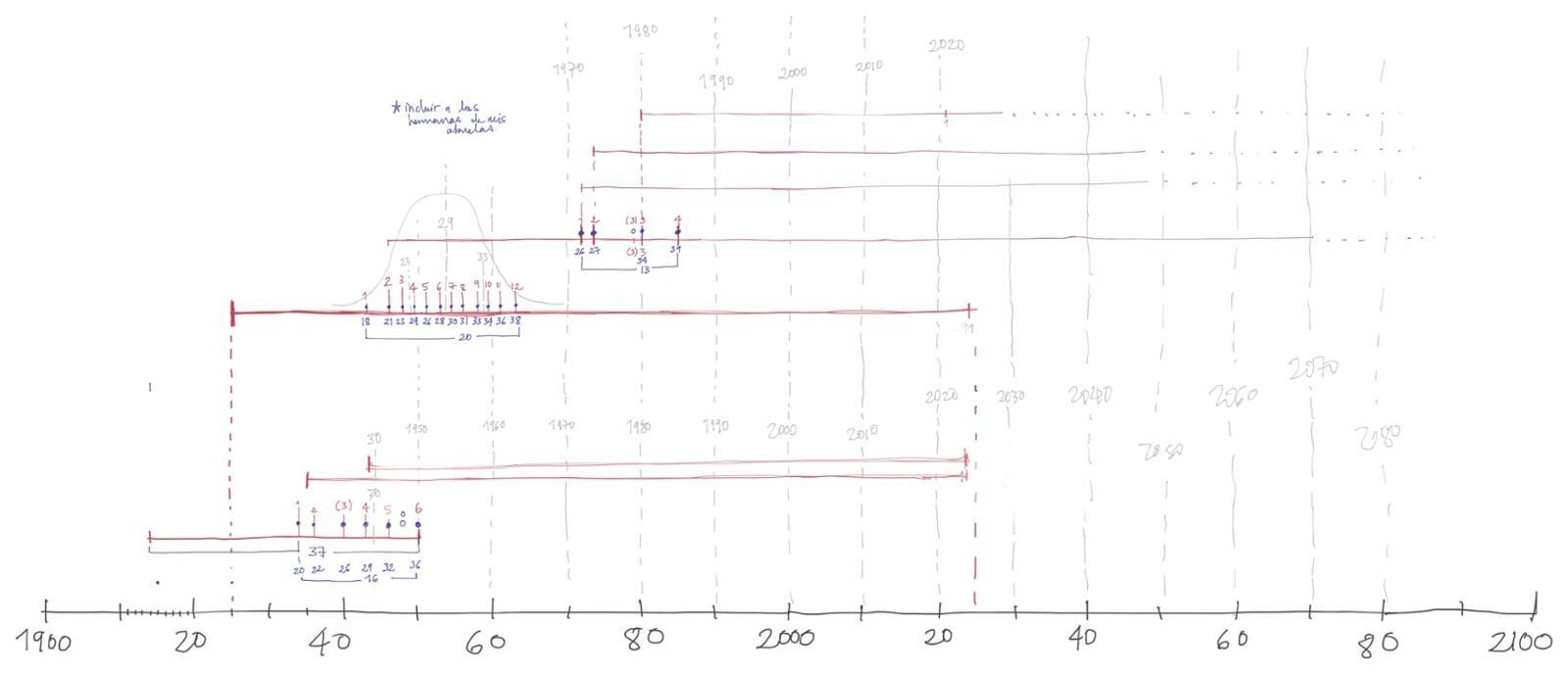
Gráfico de periodos de maternidad de las nujeres de mi familia. Sylvia Jaimes, 2025 (cc)
tGraphic drafting maternity in my family. Drawing by Silvia Jaimes, 2025 all rights reserved.
"Mi abuela paterna tuvo por lo menos 9 embarazos, dio a luz por lo menos siete veces, y murió juntó con el último de sus hijos, a los 43 años.
Nunca supimos cuantos embarazos tuvo mi abuela materna, sabemos que 12 llegaron a término y fueron estos 12 hijos los que la despidieron a sus 99 años y medio, la semana de su muerte."
"My grandmother had given birth to 17 children at home, and she didn’t even need glasses to sew. She was married twice. She could remember the names of her grandchildren, great-grandchildren and other relatives – nearly 100 people. Her body language, her mischievous gaze and the similarities between Spanish and Brazilian Portuguese were enough to convey her sense of humour and her tenderness."
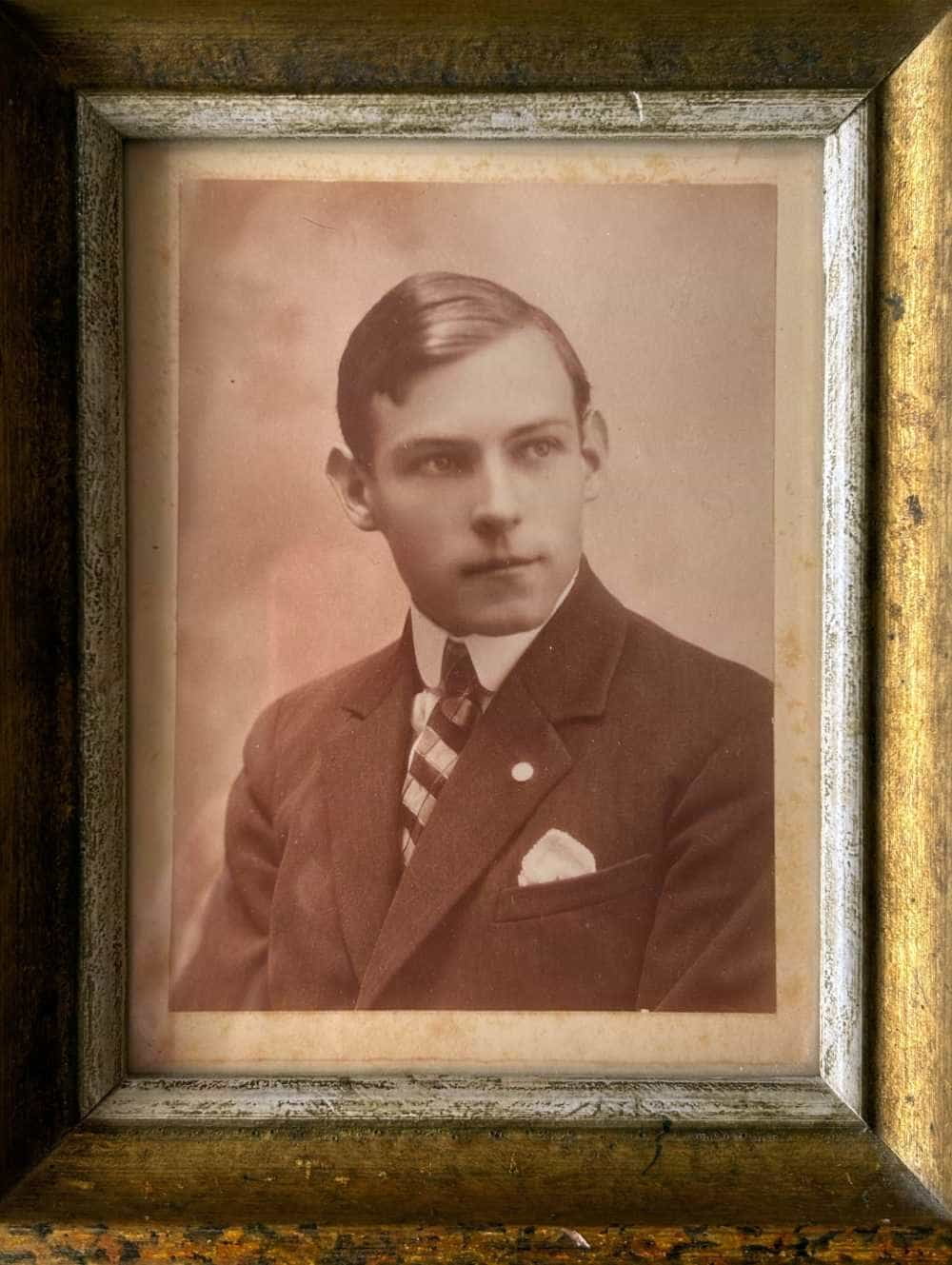
Bildlegende: Portrait des jungen Fritz Nyffenegger, ca. 1925 (cc)
Caption: Portrait of the young Fritz Nyffenegger, around 1925. All rights reserved.
Der Ehemann
"Ich kannte Fritz, den Mann meiner Grossmutter und meinen Grossvater, nicht persönlich. Er starb 1968, drei Jahre vor meiner Geburt, an den Folgen eines Hirntumors. Uns Enkelkindern, die wir ihn selbst nicht gekannt und erlebt haben, wurden verschiedene Erzählungen über seinen Charakter und sein Wesen weitergegeben. Einige davon sind sicherlich den Beeinträchtigungen infolge seiner Erkrankung und den unzähligen Operationen, denen er sich unterziehen musste, zuzuordnen.
Die folgende Gegebenheit hat uns niemand erzählt. Ich stiess erst im Laufe meiner Recherche im Staatsarchiv des Kantons Thurgau darauf.
Fritz war kantonaler Angestellter und arbeitete in der Kanzlei des Regierungsrates. Während des Zweiten Weltkriegs war diese immer wieder unterdotiert, da Fritz’ Arbeitskollegen, mitunter auch der Staatsschreiber, in den Aktivdienst eintreten mussten. Für Fritz hatte das zur Folge, dass er unzählige Überstunden leisten musste. Im Juni 1943, noch vor dem Ende des Krieges, reichte er ein Gesuch um Ausrichtung einer einmaligen Extravergütung für die geleistete Mehrarbeit ein.
In diesem Gesuch beschreibt er, dass er Arbeiten auch mit nach Hause nehmen musste und seine Ehefrau Louise jeweils die Korrektur des Amtsblattes übernahm.
Der Regierungsrat entschied sich gegen eine Vergütung von Fritz’ Überstunden. Er sah es jedoch als gegeben an, dass Louise für ihre Arbeit entschädigt werden müsse. So erhielt sie für ihre geleistete Arbeit – es wird eine Schätzung von rund 200 gemeinsamen Arbeitsstunden genannt – eine einmalige Extraentschädigung von Fr. 250.–, die Fritz zu ihren Gunsten ausbezahlt wurde."
The Husband
"I did not know Fritz, my grandmother’s husband and my grandfather, personally. He died in 1968, three years before I was born, because of a brain tumour. We grandchildren, who never knew him or experienced him for ourselves, were told various stories about his character and nature. Some of these are undoubtedly attributable to the impairments caused by his illness and the countless operations he had to undergo.
Nobody ever told us about the following fact. I only came across it whilst conducting my research in the State Archives of the Canton of Thurgau.
Fritz was a cantonal civil servant and worked in the office of the Cantonal Government. During the Second World War, the office was repeatedly understaffed, as Fritz’s colleagues – including, at times, the State Secretary – had to enter active service. For Fritz, this meant he had to work countless hours of overtime. In June 1943, even before the end of the war, he submitted an application for a one-off additional payment for the overtime he had worked. In this application, he explains that he also had to take work home with him and that his wife Louise would take on the task of proofreading the Official Gazette.
The cantonal government decided against paying Fritz for his overtime. However, it considered it a given that Louise should be compensated for her work. Consequently, for the work she had carried out – estimated at around 200 hours worked together – she received a one-off additional payment of CHF 250, which was paid to Fritz on her behalf."
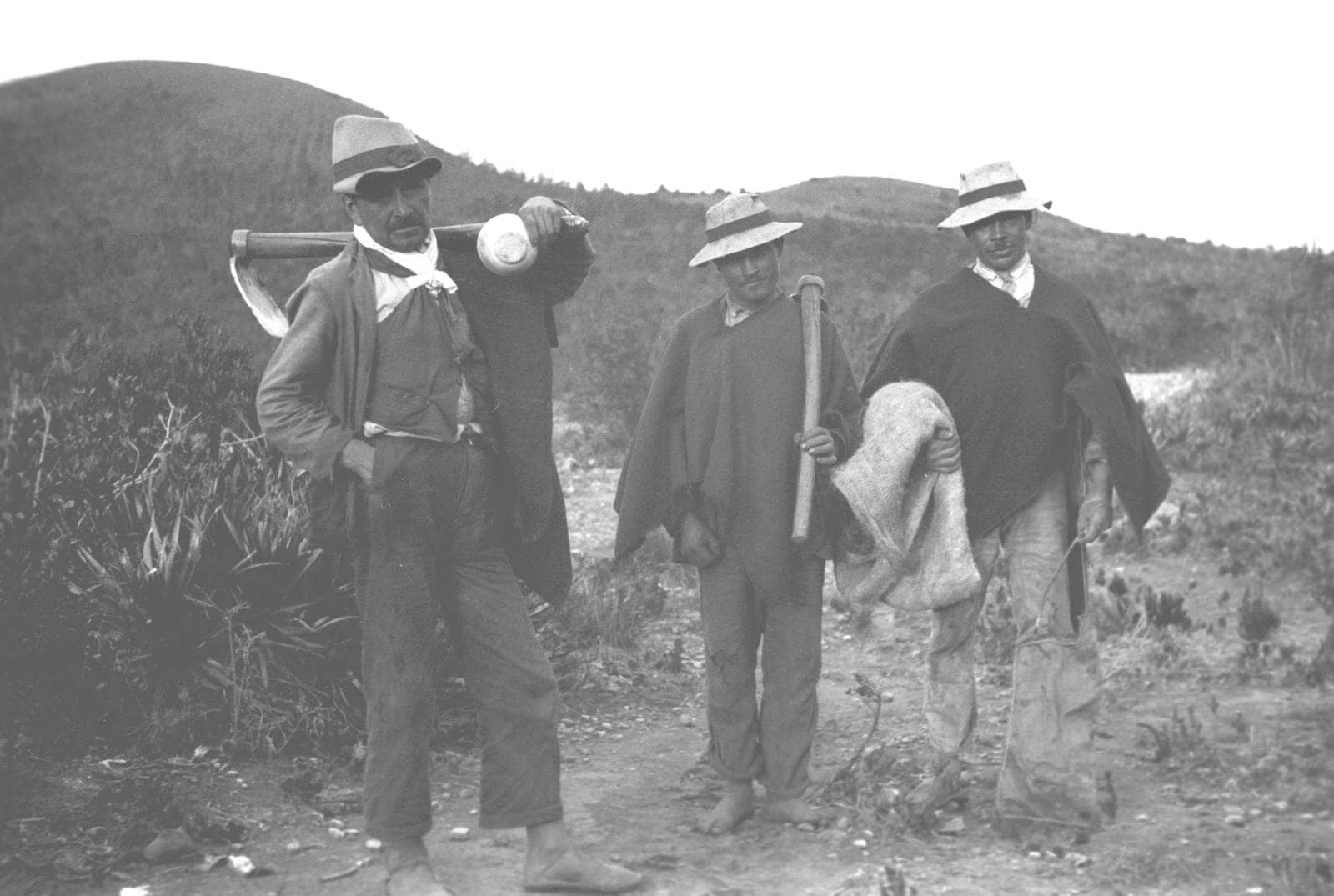
Imagen parte tomada cerca de La Calera, cerca de Bogotá entre 1934-37. Parte del archivo del fotográfo alemán: Horst Martin.
Photograph taken near La Calera, nearby Bogotá, between 1934 and 1937. Part of the archive of German photographer Horst Martin.
"Varias cosas me llaman la atención de mi abuelo, a quien nunca conocí, pero de quién existen más fotos que de mi abuela. En su retrato, aquella imagen insigne que acompañaba a la foto de mi abuela en el porta-retrato, su cabeza aparecía centrada como si se tratara de un monumento, se destacaba su cabello grueso y liso y su bigote de cepillo, que he encontrado después en algunos de los campesinos fotografiados por Horst Martin en 1934, en su viaje entre Santander y Cundinamarca."
"There are several things about my grandfather, whom I never met, that catch my eye. There are more photographs from him, than from my grandmother. In his portrait—that iconic image that stood alongside my grandmother’s photo in the picture frame—his head was centered as if it were a monument. His hair looked thick and straight , and he always wore a tooth-brush-moustache that easily stood out. Some of the peasants photographed by Horst Martin in the late1930s (during his journey through Santander and Cundinamarca) wear the same mustache."
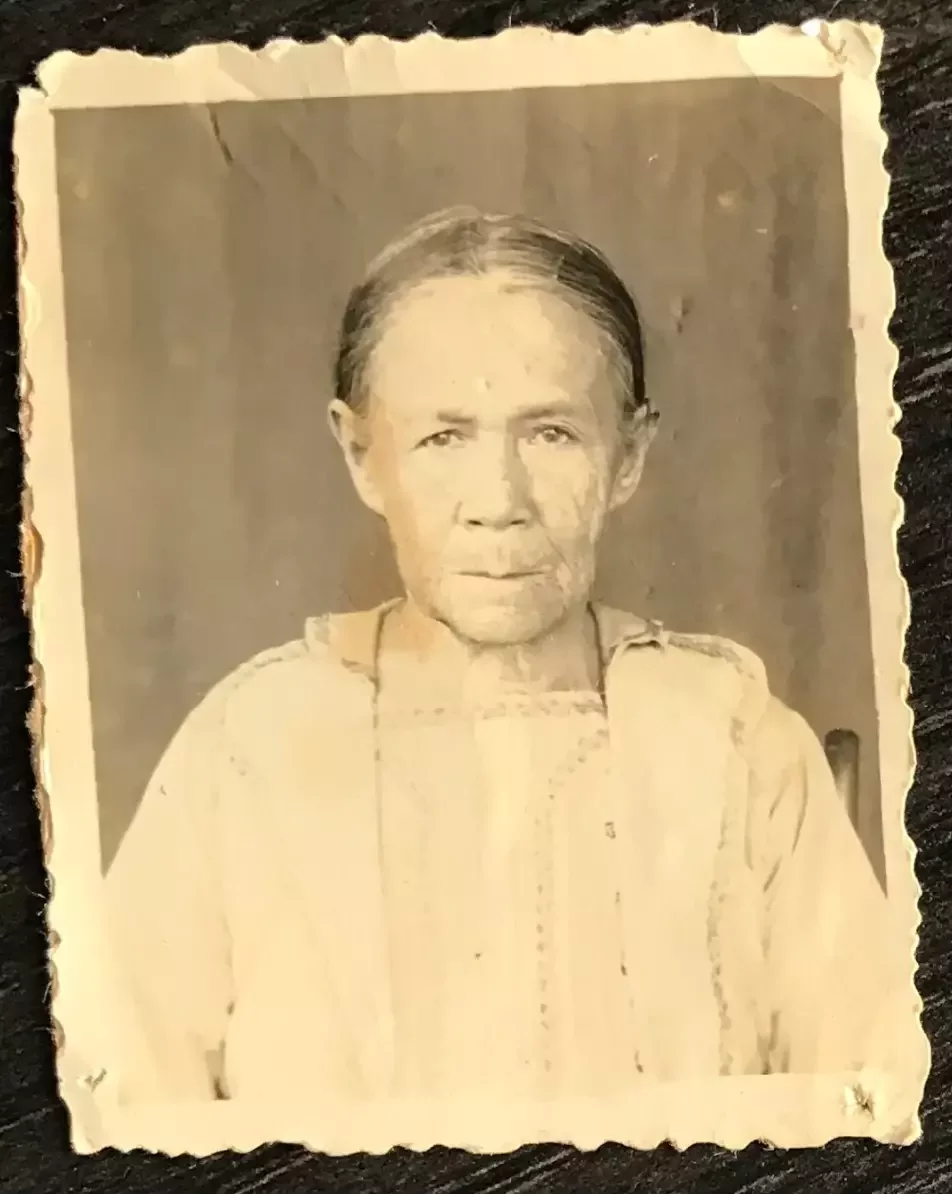
" Sólo hasta ahora, entiendo las complejidades de estas raíces… según mi padre, el padre de mi abuela fue raptado por las comisiones que robaban bebés y niños de los asentamientos indígenas, para culturizarlos y luego en-listarlos en la armada brasileña. Mi bisabuelo era marino. Se casó, pero al parecer, mi bisabuela lo abandonó luego de enterarse que era indígena, por eso mi abuela Aurea no tuvo más hermanos. En los vestigios de algunos relatos entre mi padre y mi abuela, existe una fotografía de un pariente con atavíos indígenas. Mi abuela sin embargo, tiene más rasgos africanos que indígenas, lo que me hace pensar que aquel niño raptado a finales del siglo XIX, era más un caboclo que un indígena."
Reinheit und Prüderie
"Meine Grossmutter beanspruchte für sich das Recht, selbst zu entscheiden, wie, wo und mit wem sie leben wollte. Als sie frisch verheiratet mit Fritz von Aarau nach Frauenfeld im Thurgau zog, war sie mit dieser Lebensphilosophie eine exotische Frau. Sie trug bequeme, nicht einengende Kleidung, die sie selbst aus natürlichen Stoffen nähte. Sie ging nackt im nahegelegenen Bach schwimmen und schnitt ihren Söhnen die Haare nicht. Und doch war sie, wenn es um Sexualität und Familienleben ging, nicht weniger prüde und konservativ als die Bevölkerung in Frauenfeld und Umgebung.
Als meine Mutter, 18 Jahre alt, unverheiratet, aber volljährig, mit meinem älteren Bruder schwanger wurde, meldete meine Grossmutter sie ohne Umschweife von ihrer Berufslehre als Schriftsetzerin ab. Es wurde über ihren Kopf hinweg entschieden, dass sie umgehend heiraten musste. Damit wurde das Konzept einer intakten und ehrenhaften Familie befolgt, das seinen Ursprung in religiösen, patriarchalen und paternalistischen Vorstellungen von Frauen- und Familienleben hatte. Die Einhaltung dieser Vorstellungen wurde priorisiert. Die Wünsche und Vorstellungen meiner Mutter fanden weder Ausdruck noch wurden sie in die Überlegungen und Entscheidungen einbezogen."
when my mother, only 18 and unmarried, was pregnant with my older brother, my grandmother without further ado deregistered her from her apprenticeship as a typesetter and she had to get married straight away. The family's reputation in the eyes of the outside world was prioritized over what my mother wanted or imagined for herself. The burden of presenting an intact family image was placed solely on the daughters."
Die Kirche
"Ich habe meine Grossmutter immer als sehr gläubige Christin erlebt. Durch meine Recherche und Gespräche mit meiner Tante Maya und meinem Onkel Matthias hat sich dieses Bild mit der Zeit sehr differenziert.
Louise und ihr Ehemann Fritz sind, so habe ich erfahren, in jungen Jahren aus der Kirche ausgetreten. Sie verfolgten lebensreformistische, anthroposophische und freiwirtschaftliche Ideen und interessierten sich eher für buddhistische und hinduistische Philosophien. Christliche Praktiken nahmen im Vergleich dazu wenig Platz ein.
Für ihre älteste Tochter Maya wurde das als Heranwachsende immer komplizierter und unangenehmer. Sie fühlte sich von den normalen Aktivitäten ihrer Schulkameradinnen und -kameraden ausgeschlossen und wollte so gerne dazugehören. Als es schliesslich auf die Konfirmation zuging, formulierte sie gegenüber ihrer Familie ihren Wunsch und konnte offenbar überzeugend darlegen, dass es für sie, aber auch für ihre jüngeren Geschwister wichtig wäre, Teil der evangelischen Glaubensgemeinschaft zu sein.
Louise nahm sich dieses Bedürfniss zu Herzen und vereinbarte alsbald einen Termin in der evangelischen Stadtkirche. Maya erzählte mir, dass dies an einem Nachmittag unter der Woche gewesen sein muss, denn sie seien allein in der Kirche gewesen. Sie seien, angefangen mit ihr, ein Geschwister nach dem anderen getauft worden, während die Sonne durch die farbigen Kirchenfenster schien und den Raum in warmes Licht tauchte."
"I always knew my grandmother to be a very devoted Christian. Through my research and conversations with my aunt Maya and my uncle Matthias, this picture has become much more nuanced over time.
I have learnt that Louise and her husband Fritz left the church when they were young. They followed ideas associated with the Life Reform Movement, anthroposophy and free-market economics, and were more interested in Buddhist and Hindu philosophies. Christian practices, by comparison, played a minor role in their lives.
For their eldest daughter Maya, this became increasingly complicated and uncomfortable as she grew up. She felt excluded from the normal activities of her schoolmates and wanted so much to fit in. As confirmation came closer, she expressed her wish to her family and was apparently able to make a convincing case that it was important for her – and also for her younger siblings – to be part of the Protestant faith community.
Louise took this need to heart and promptly arranged an appointment at the Protestant town church. Maya told me that this must have been on a weekday afternoon, as they were alone in the church. Starting with her, they were baptised one sibling after another, whilst the sun shone through the coloured church windows and bathed the room in warm light."
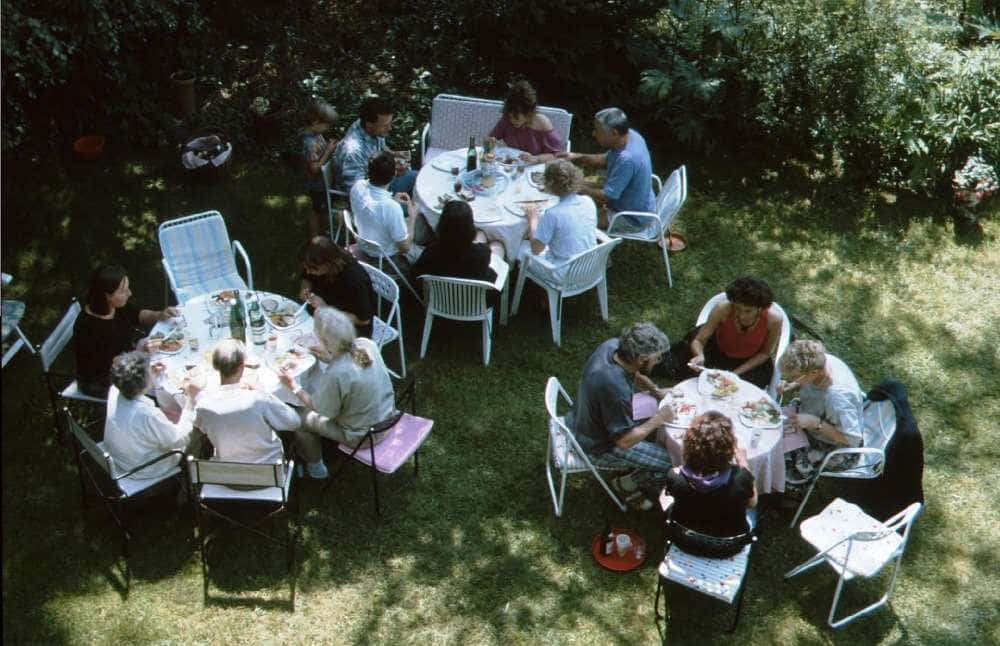
" Meine Grosseltern führten ein offenes Haus. Das war in den 1940er- und 1950er-Jahren im ländlich geprägten und konservativen Frauenfeld sehr ungewöhnlich. Louise und Fritz beherbergten unzählige Gäste, die mit ihnen assen, zum Teil aber auch mehrere Tage lang gemeinsam mit ihnen und den Kindern Haus und Garten bevölkerten. Das waren Familienmitglieder, Freunde, aber auch Menschen aus der Lebensreform- und Freikörperbewegung. Für die Kinder bedeutete das jeweils, dass sie zusammenrücken und ihre Zimmer und Betten für die Gäste zur Verfügung stellen mussten.
Auch als ich ein Kind war, in den 1970er- und 1980er-Jahren, erlebte ich dieses offen geführte Haus. Cousinen und Cousins verbrachten ihre Schulferien bei meiner Grossmutter. Ihre Geschwister und deren Partner waren über die Feiertage im Haus, und jede und jeder, die oder der an die Tür klopfte, wurde eingelassen, angehört und oft bewirtet.
Meine Grossmutter erzählte uns Enkelkindern immer wieder, dass man nie wisse, ob nicht Jesus vor der Tür stehe. Diese Haltung hat sich mir unbewusst eingeprägt. In meinen Jahren als junge Mutter hatte ich denn auch grosse Mühe, Menschen abzuweisen, die offensichtlich keine guten Absichten hatten. Erst nach einigen grenzwertigen Erfahrungen lernte ich, Nein zu sagen und meine privaten Räume besser zu schützen."
"My grandparents kept an open house. That was very unusual in the 1940s and 1950s in the rural and conservative town of Frauenfeld. Louise and Fritz hosted countless guests who ate with them, and in some cases even stayed for several days, sharing the house and garden with them and the children. These included family members, friends, and people from the life reform and nudist movements. For the children, this always meant having to make room and make their bedrooms and beds available for the guests.
Even when I was a child, in the 1970s and 1980s, I experienced this open-door household. Cousins spent their school holidays with my grandmother. Her siblings and their partners were in the house over the holidays, and anyone who knocked on the door was let in, listened to and often offered hospitality.
My grandmother would often tell us grandchildren that you never know whether Jesus might be standing at the door. This mentality has become ingrained in me without my conscious awareness. During my years as a young mother, I therefore found it very difficult to turn away people who clearly did not have good intentions. It was only after a few borderline experiences that I learnt to say ‘no’ and to better protect my private space."
"La producción comercial de tabaco en Colombia, se remonta a la época de la Colonia y se ha constituido a través de los años en fuente generadora de empleo e ingresos para la población campesina. El cultivo de este producto se concentra básicamente en los departamentos de Boyacá, Caldas, Cesar, Huila, Nariño, Norte de Santander, Quindío, Valle del Cauca y Santander, este último considerado como uno de los mayores productores de tabaco en Colombia, con cerca del 50% de la producción de tabaco negro."
"Commercial tobacco production in Colombia dates back to the colonial era and has, over the years, become a source of employment and income for the rural population. Tobacco cultivation is concentrated primarily in the departments of Boyacá, Caldas, Cesar, Huila, Nariño, Norte de Santander, Quindío, Valle del Cauca, and Santander—the latter considered one of Colombia’s largest tobacco-producing regions, accounting for nearly 50% of the country’s black tobacco production."
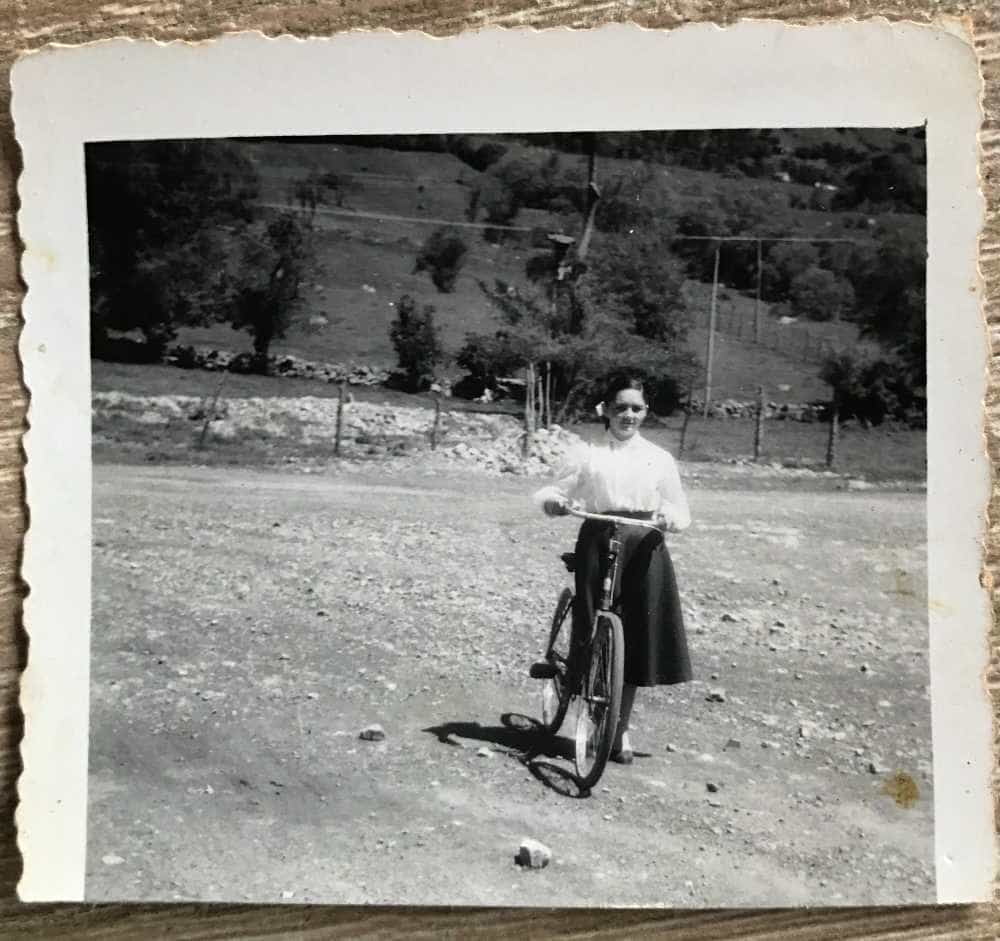
"Mi padre comenzó el internado a los 12 años, las escuelas de las áreas más alejadas del centro del país, en esa época, tenían falta de maestros, y cuando no había nadie, la escuela cerraba, a veces hasta por un año. Mi padre fue a estudiar a Pamplona, una ciudad que hoy en día se encuentra a 60 minutos de Málaga. Era un colegio masculino. Es muy poco lo que me cuenta de esa época, cuando fuimos a visitarlo hace algunos años, me mostró las coreografias deportivas que hacían todos los días en el patio central. "
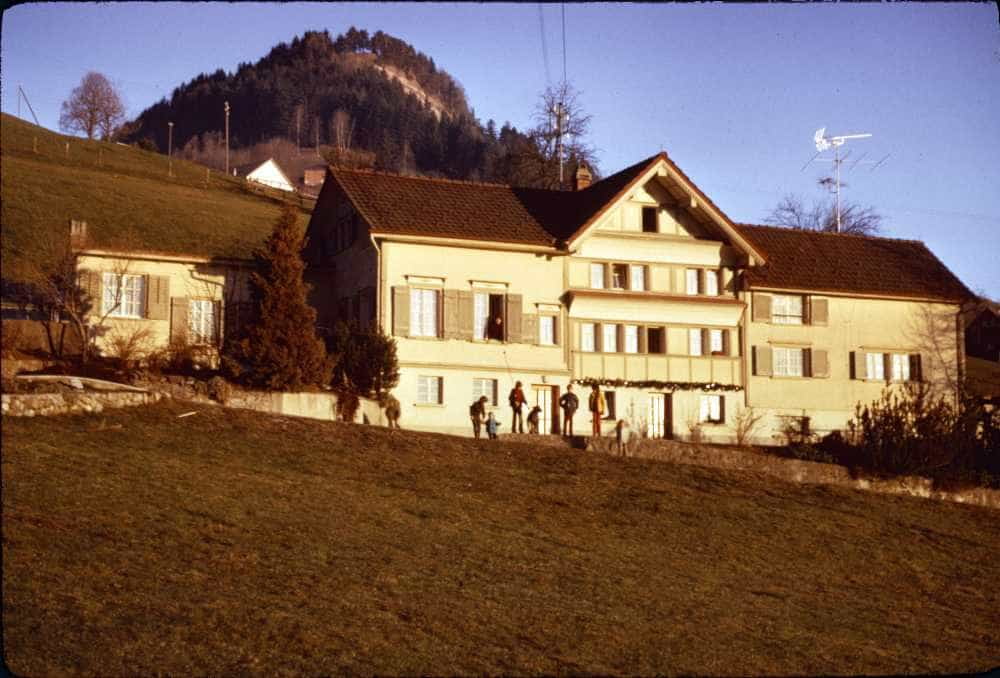
"Cuando mi tía mayor le confesó a mi abuela que se había enamorado de otro hombre y deseaba separarse, mi abuela, apuntándole con el dedo índice le dijo: eres una mujer casada y tienes una familia, y la envió a una especie de orfanato religioso junto con mi primo ( su hijo mayor). Mi tía pasó casi seis meses en este lugar, desempeãndo labores domésticas, a veces mi abuela iba y llevaba o traía a mi primo (que en aquel momento tenía menos de dos años).
Poco después mi madre comenzó a sufrir de fiebres muy seguido, mi abuela entonces la mandó también para este hogar. Como mi madre era pequeña adoró esta casa."
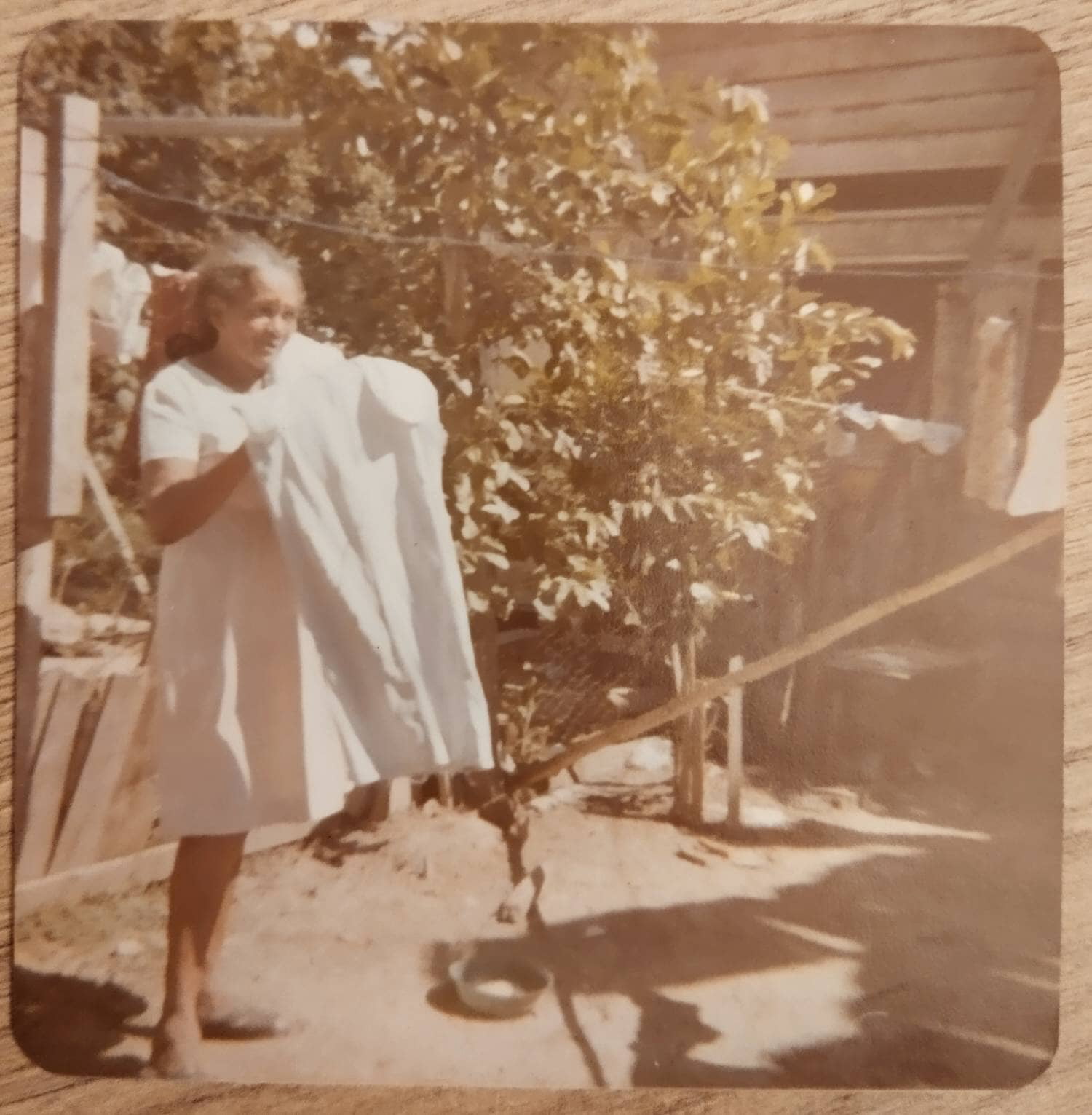
"Dona Aurea, salía muy temprano por la mañana con sus hijos los domingos, era el ritual de cada semana: Ir a acompañarla a lavar la ropa en el río, así podían compartir en familia, nadar, jugar y al mismo ayudar con la carga de la ropa."
"Dona Aurea used to set off very early in the morning with her children on Sundays; it was a weekly ritual: to go and help her wash the clothes in the river, so they could spend time together as a family, swim, play and, at the same time, help carry the load of washing."
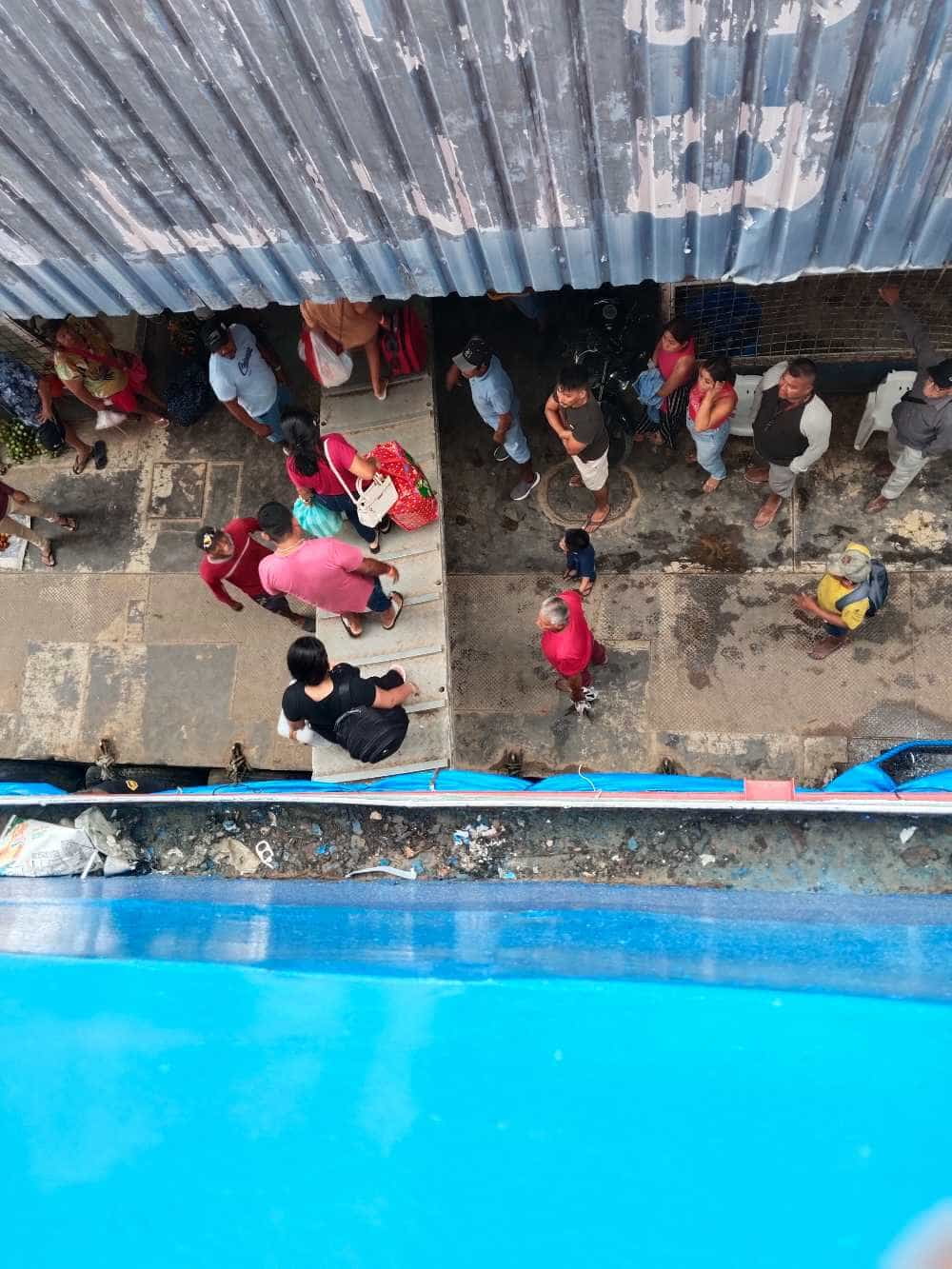
"Los barcos que cruzan el Amazonas entre Tabatinga y Manaus, tienen muchas paradas, pues son para algunas personas el único medio de transporte. El tablón, es un pequeño puente rudimentario pero muy eficaz y versátil. Algunos puntos de parada ni siquiera son puertos, incluso pueden ser embarcaciones, por tanto el tablón permite y resiste el paso de cientos de personas que suben y bajan de los barcos. El caos, el ruido se reflejan en un enigmático, intenso ir y venir... entrar y salir, llegar y partir"
"Los Domingos después de la misa de la tarde era el tiempo para socializar. Mis madre y sus amigas recorrían la plaza del pueblo tomadas, de gancho, primero en la dirección de las manillas del reloj y luego al contrario. Los bancos estaban distribuidos por varias zonas de la plaza central, debajo de los árboles. Al encontrarse con algún vecino mis tías paraban a saludar, charlaban y luego retomaban la marcha, o la danza de las vueltas a la plaza. "
Estación de Escucha de Alta Montaña
Residencia en Sibaté, Colombia. Julio 2026
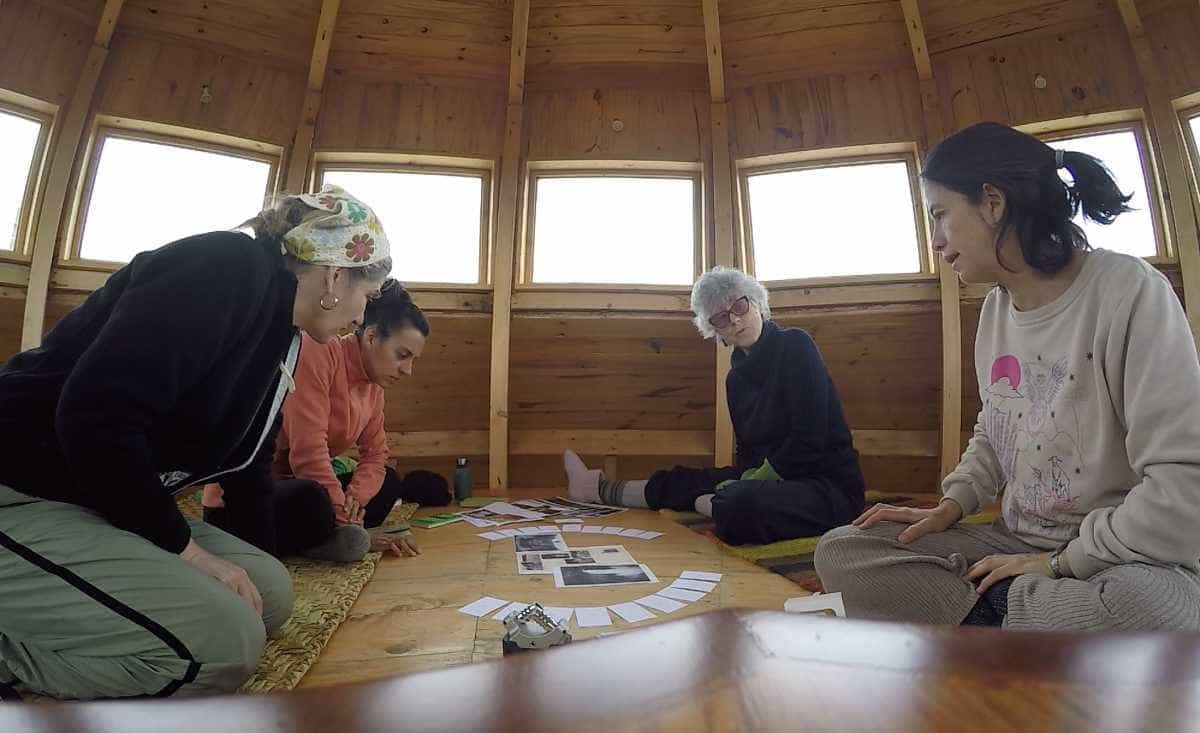
Durante esta residencia, construimos estrategias para motivar las conversaciones, incitar a los futuros invitados a contarnos sus propias historias, compartir una parte de su álbum familiar e hilar con nosotras. Organizamos las capas históricas y políticas que se integran a los relatos íntimos de nuestras abuelas y nuestras familias, a través de figuras que se ven reflejadas en un juego de cartas.
During this residency, we developed strategies to spark conversations and encourage future guests to share their own stories. Future guests may intervene with a fragment of their family album, and weave their stories with the threads that the project suggests through a card game.
The historical and political layers are depicted depicted through a mixture of chance, intuition and prediction.
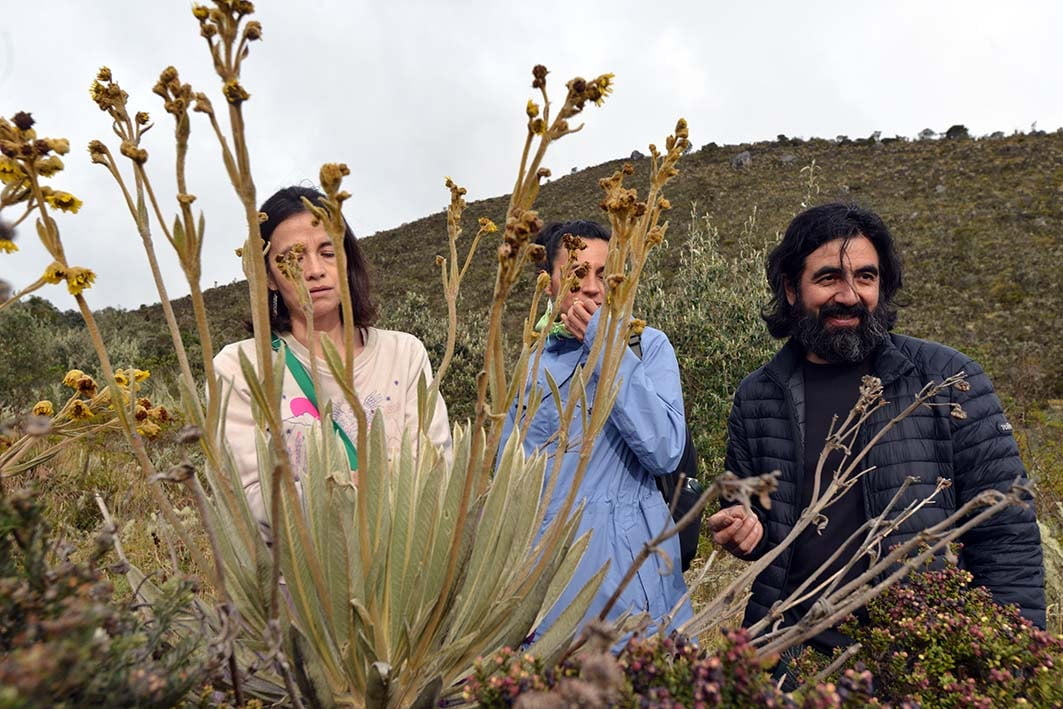
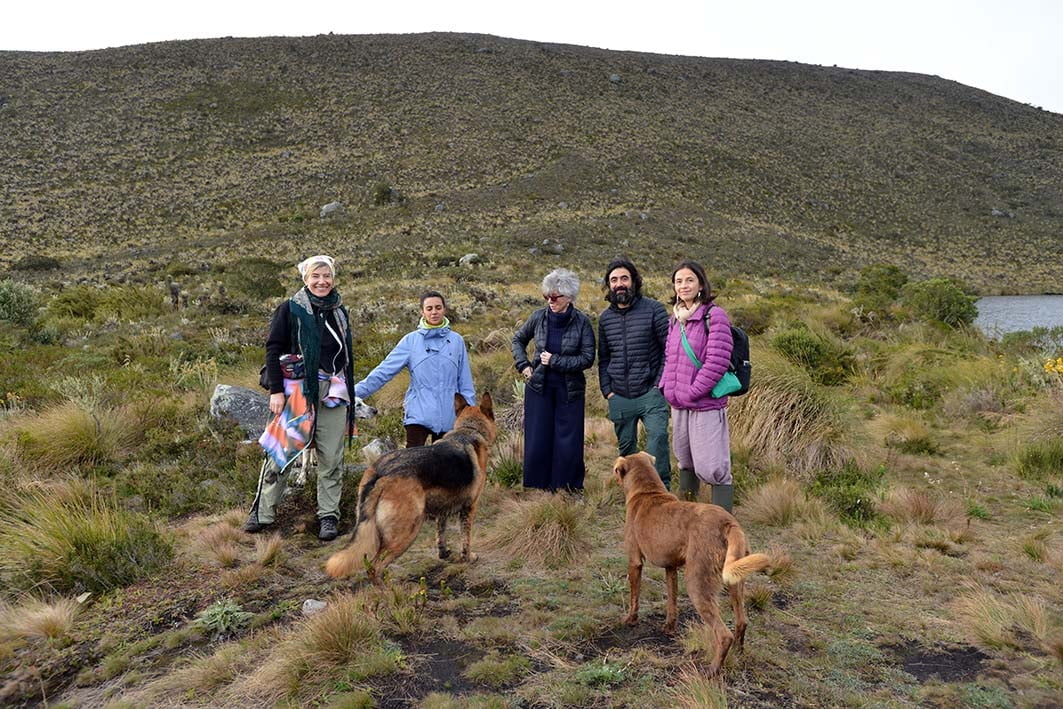
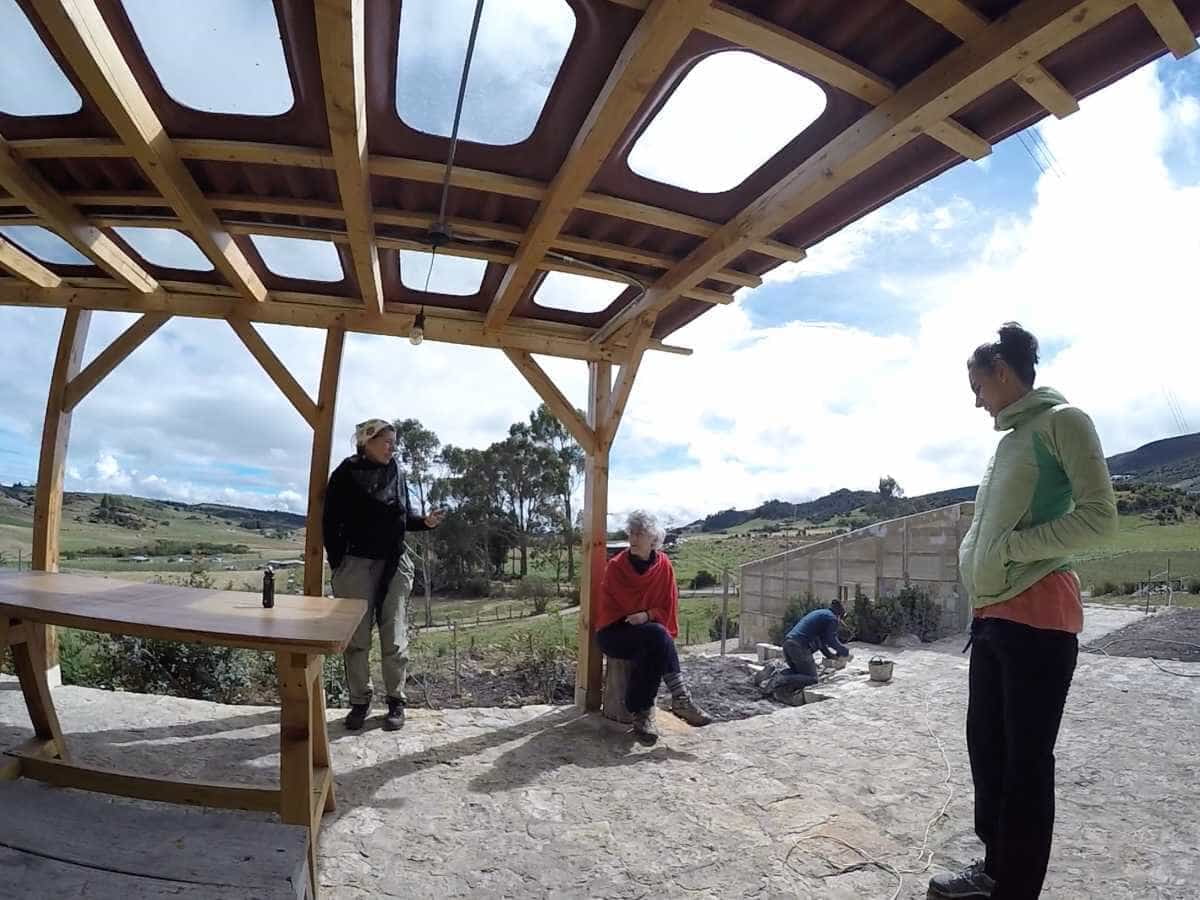
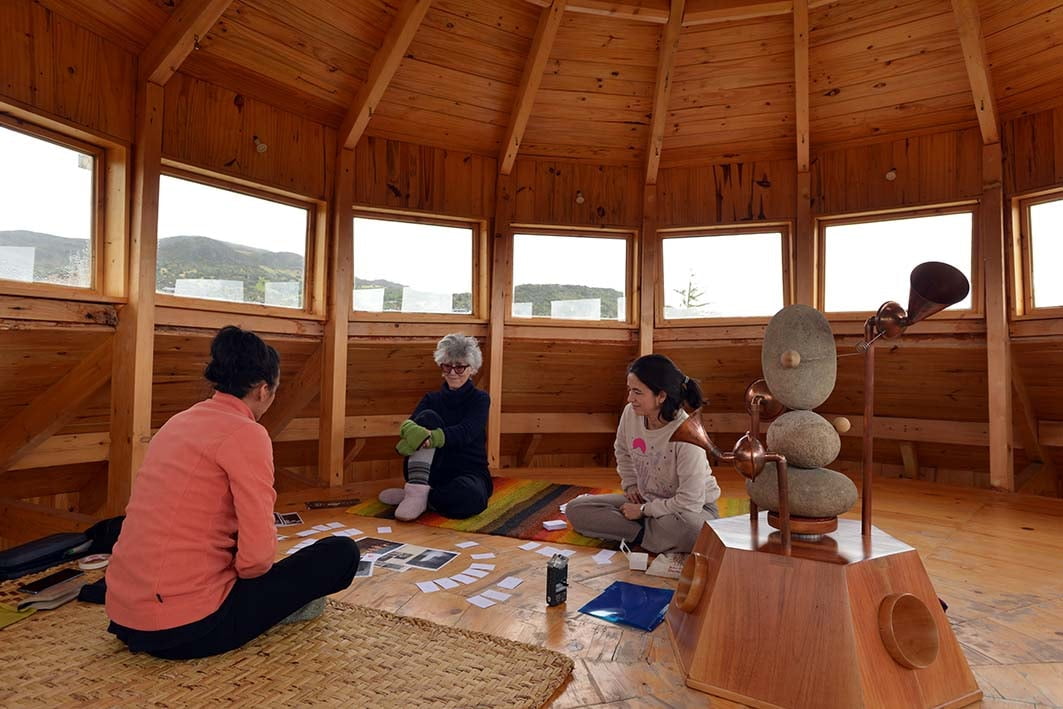
La Estación de Escucha de Alta Montaña está ubicada en Sibaté- Colombia, y es un espacio que acoge artistas, pensadores, creativos: muy cerca del Páramo, este espacio en sí es un lugar para entender la importancia de las comunidades.
The Alta Montaña Listening Station is situated in Sibaté, Colombia, and is a space that welcomes artists, thinkers and creative individuals: situated very close to the Páramo, this space itself is a place where one can come to understand the importance of communities.
CNA Centro Nacional de las Artes Delia Zapata
Residencia en Bogotá, Julio 2026
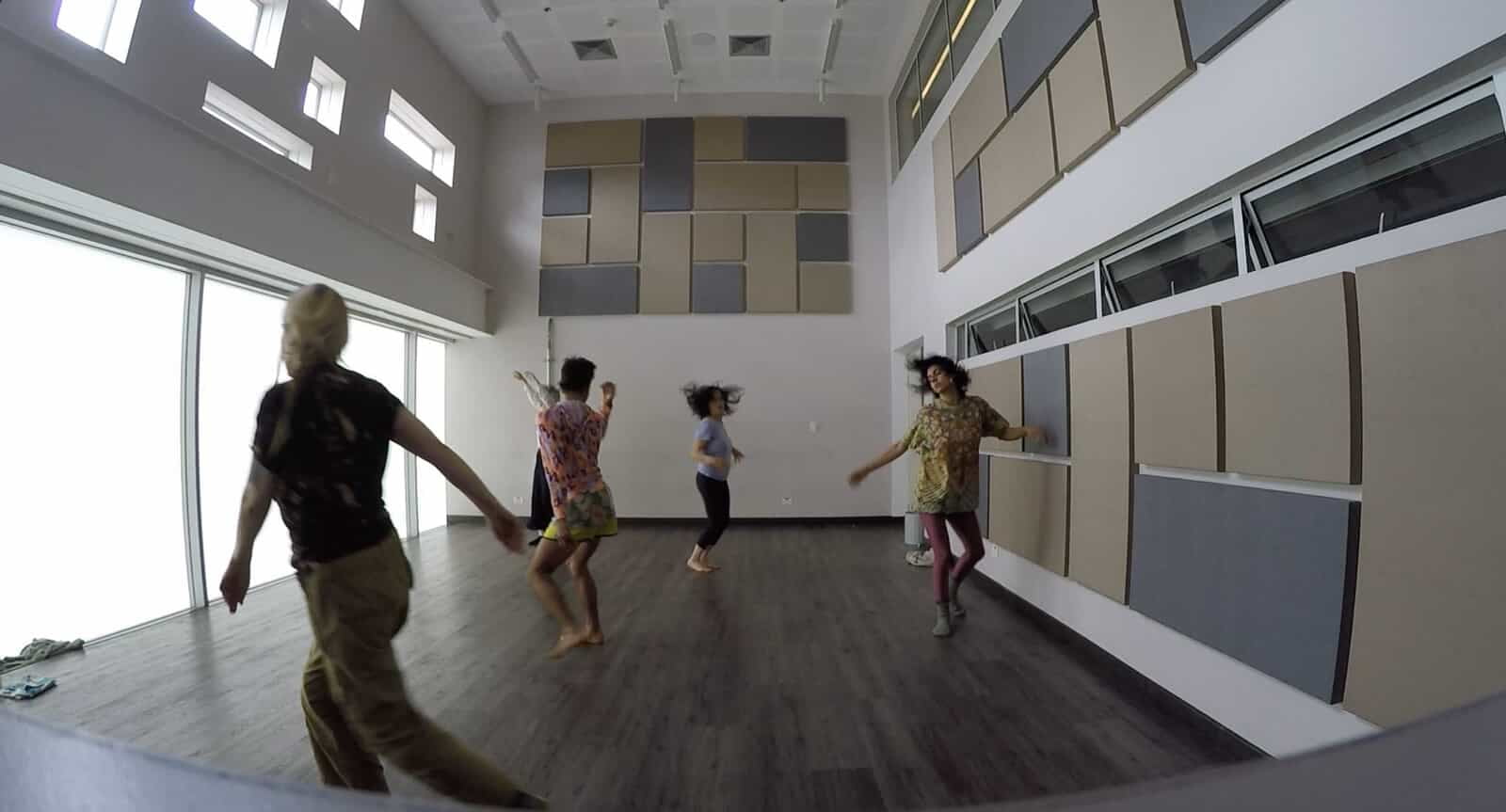
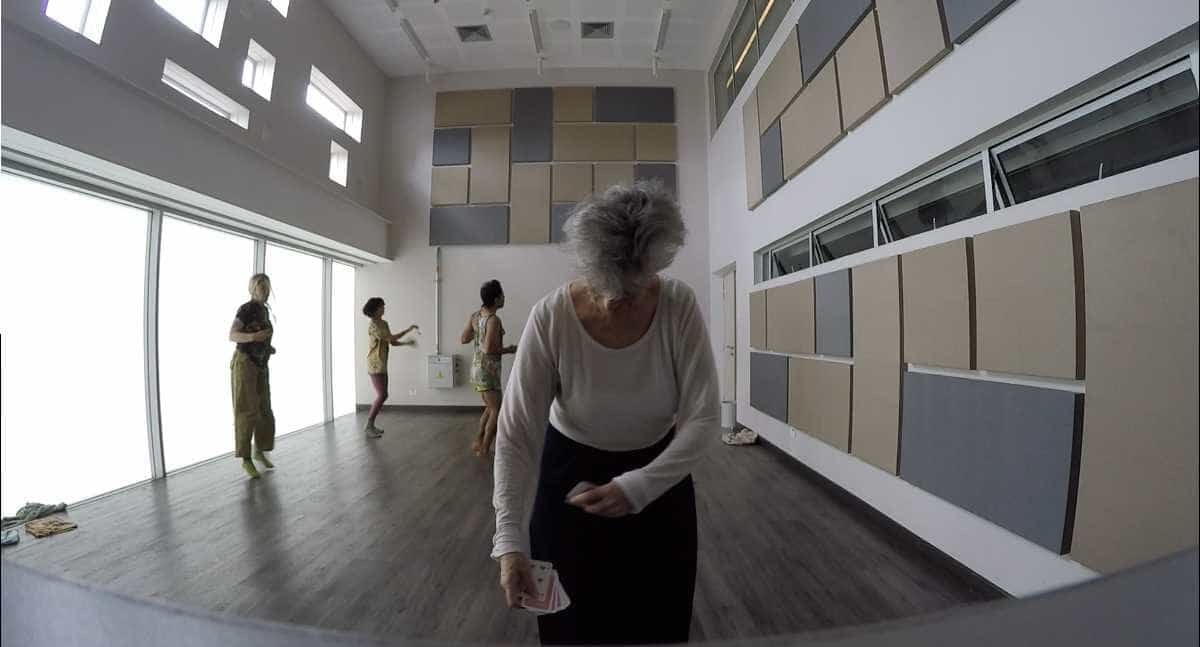
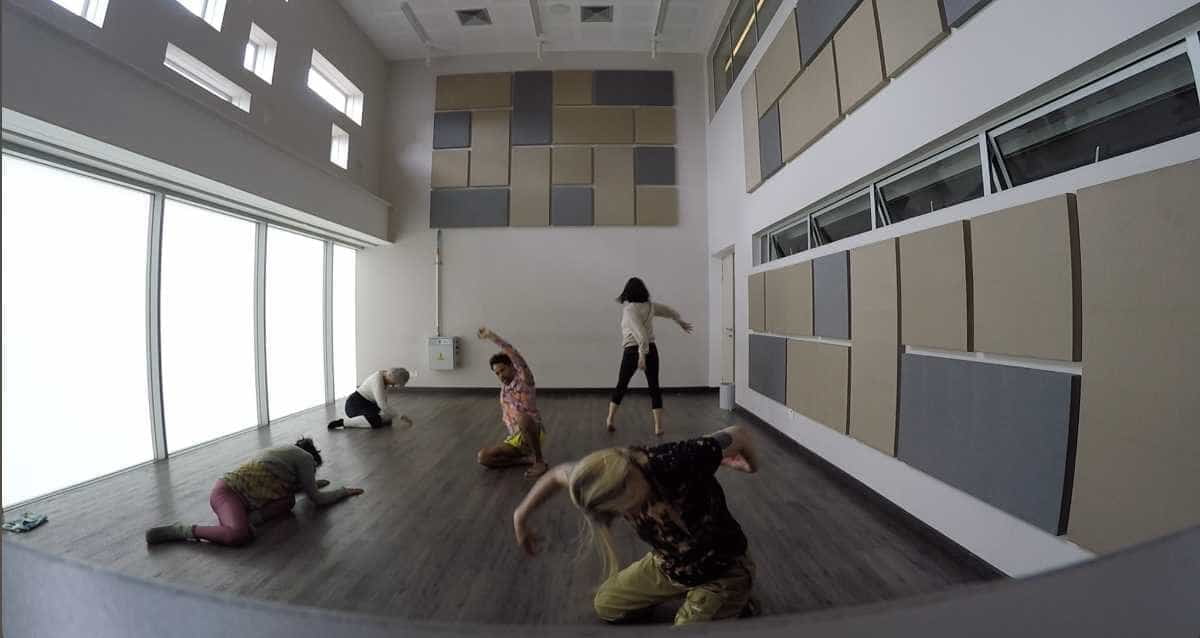
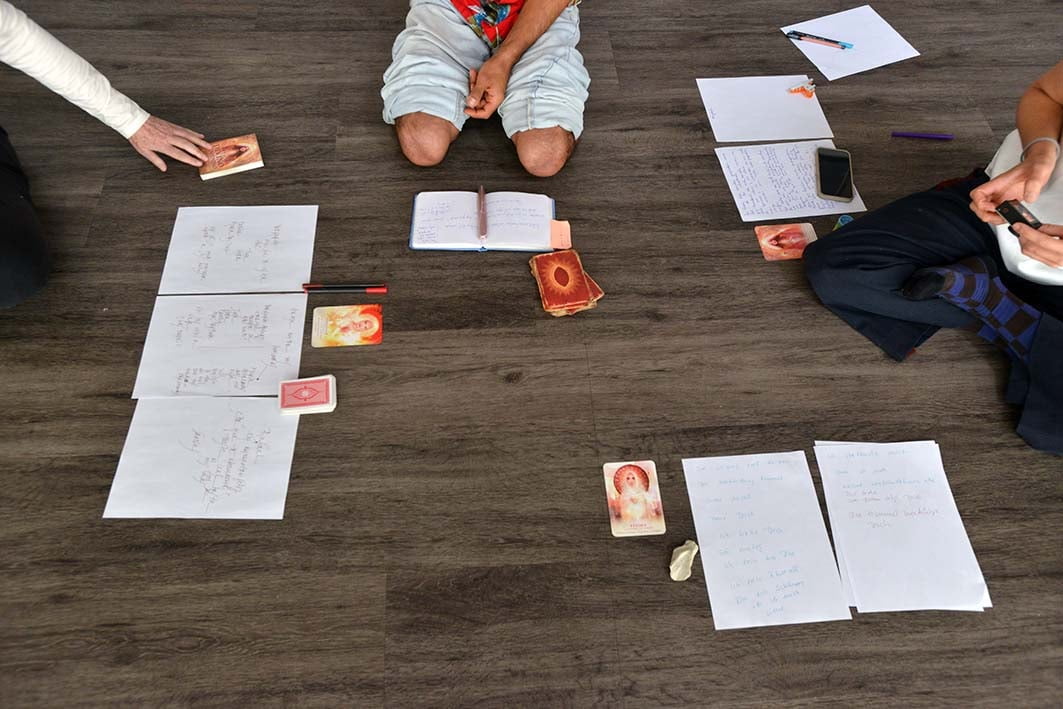
Muchos actos de espiritismo implican la participación de un medium, cuyo cuerpo y voz se transforman en un vehículo de comunicación. En esta residencia exploramos maneras de conversar con nuestras abuelas a través de ejercicios de expresión emocional y física. Estas exploraciones permitieron dinamizar las ideas que guardábamos sobre ellas. Fueron momentos en que dos flujos temporales diferentes fueron capaces de coincidir en una misma materia sensible.
El CNA surgió de la renovación del antiguo teatro Delia Zapata y es un centro cultural que acoge, apoya y programa proyectos artísticos de teatro, danza, música y artes performativas en Bogotá.
Many spiritualist practices involve a medium, whose body and voice become a vehicle for communication. In this residency, we explored ways to converse with our grandmothers through exercises in emotional and physical expression. These explorations helped breathe new life into the ideas we held about them. These were moments when two different temporal flows were able to converge within the same sensitive matter.
The CNA was created following the refurbishment of the former Delia Zapata Theatre and is a cultural centre that hosts, supports and organizes artistic projects in theatre, dance, music and the performing arts in Bogotá.